

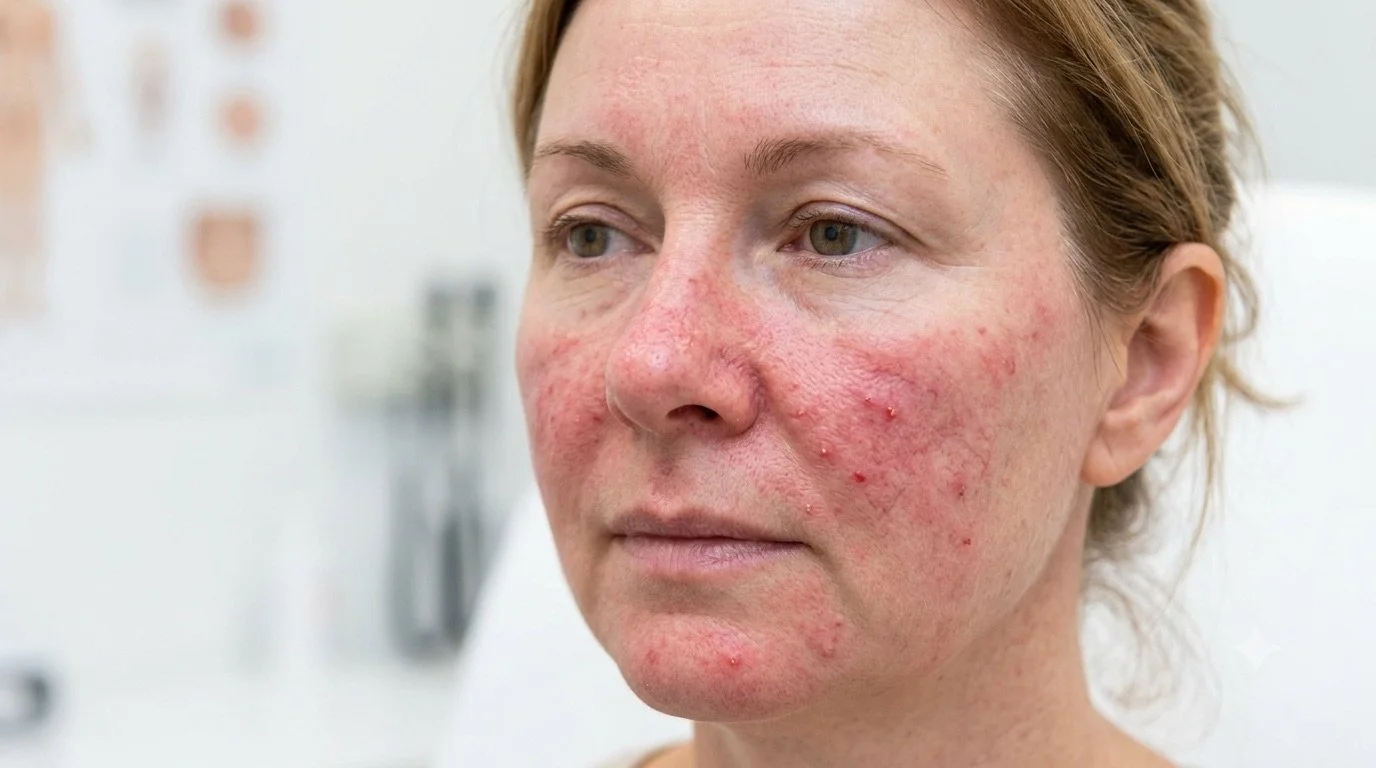
Rosacea and Facial Redness
Facial redness is not always easy to interpret.
It may begin as flushing after exercise, a hot shower, alcohol or time outdoors. The skin might sting when skincare is applied, remain red for longer than it once did, or develop small inflammatory bumps that resemble acne.
These symptoms can arise from Rosacea.
At Cosmenon, consultation considers the pattern of symptoms, their progression, skin sensitivity, previous treatments, possible triggers and any eye involvement.
Treatment may include changes to skincare, prescription medication, management of specific triggers and referral for vascular laser or specialist dermatology care.
Elective aesthetic procedures are considered separately and may need to be postponed while the condition is active.
What is Rosacea?
Rosacea is a chronic inflammatory skin condition that mainly affects the central face. It commonly involves the cheeks, nose, forehead and chin, although the eyes and eyelids may also be affected. The condition tends to fluctuate. Symptoms may settle for a period and then return, sometimes in response to heat, ultraviolet exposure, alcohol, exercise, emotional stress or products that irritate the skin. Rosacea is treatable, but it is usually managed rather than permanently cured.
Rosacea does not look the same in every patient. Current clinical guidance recommends identifying the individual features that are present rather than assigning every patient to one fixed subtype. These features may require different forms of treatment.
Common Signs and Symptoms
Rosacea may cause one or more of the following:
episodes of facial flushing
persistent central facial redness
visible small blood vessels
red papules and pustules
burning, stinging or heat within the skin
dryness, scaling or unusual sensitivity
facial swelling
thickening or enlargement of facial tissue
dry, gritty, irritated or bloodshot eyes
recurrent eyelid inflammation, styes or chalazia
Some signs are more visible in lighter skin tones. In more deeply pigmented skin, rosacea may be recognised through warmth, burning, sensitivity, swelling, inflammatory lesions or a dusky red, violet or brown change rather than obvious bright redness.
-
Flushing describes temporary episodes in which the face becomes warmer or redder. Persistent erythema refers to background redness that remains between those episodes.
Early rosacea may mainly produce intermittent flushing. With time, the redness can become more persistent and small facial vessels may become visible. Flushing can also occur for reasons unrelated to rosacea, including menopausal vasomotor symptoms, medication effects, alcohol, anxiety, heat exposure and, less commonly, systemic illness.
The history is therefore important. We ask when the flushing began, how long it lasts, whether it is accompanied by burning or swelling, and whether it follows a consistent pattern.
-
Rosacea can produce inflamed red bumps and pustules across the central face. These are sometimes mistaken for adult acne.
Comedones (blackheads and whiteheads) are characteristic of acne and are generally absent in rosacea. A patient can also have both conditions at the same time.
Inflammatory lesions associated with rosacea may respond to topical medication such as ivermectin, azelaic acid or metronidazole. More extensive disease may require oral treatment, commonly doxycycline, after consideration of contraindications and potential adverse effects.
-
Telangiectasia are small widened blood vessels visible near the skin surface. They commonly appear around the nose and across the cheeks.
Medication used for inflammatory papules and pustules does not usually remove established vessels. Vascular laser or appropriately selected intense pulsed light treatment may be considered once the diagnosis is clear and significant active inflammation has been controlled.
Results vary according to the type, depth and distribution of the vessels, the device used and the operator’s experience. Several sessions may be required, and new vessels can develop over time. Evidence supports a role for laser and light-based treatment, although comparative evidence is less extensive than it is for several established topical therapies.
Cosmenon does not currently treat established facial vessels with a vascular device. Where this appears appropriate, referral to an experienced dermatologist or laser practitioner may be recommended.
Skin Sensitivity and Barrier Dysfunction
Rosacea-prone skin often reacts to products that were previously well tolerated. Water, cleansers, sunscreen or moisturiser may cause burning or stinging. Frequent exfoliation and repeated attempts to “treat the redness” can make this worse.
During an active phase, the skincare routine may need to become simpler:
a mild, fragrance-free cleanser
a bland moisturiser selected for individual tolerance
daily broad-spectrum sun protection
temporary withdrawal of irritating active ingredients
avoidance of scrubs, cleansing brushes and abrasive treatments.
There is no single sunscreen formulation that suits every patient with rosacea. Mineral filters are well tolerated by some people, while others prefer modern organic filters. Adequate broad-spectrum protection and consistent tolerability matter more than insisting on one universal formulation.
New products should usually be introduced individually rather than changing an entire routine at once. This makes irritation easier to identify.
What causes Rosacea?
Rosacea does not have one established cause. Current research implicates an interaction between innate immune activity, neurovascular dysregulation, skin-barrier disturbance, ultraviolet exposure, microorganisms and individual susceptibility.
Demodex mites, which normally inhabit human skin, may contribute to inflammation in some patients. Their presence does not mean that rosacea is caused by poor hygiene, and repeatedly stripping or disinfecting the skin is likely to worsen barrier irritation. Topical ivermectin appears to have both anti-inflammatory and anti-Demodex effects.
Research into the gut microbiome, small intestinal bacterial overgrowth and associations between rosacea and gastrointestinal disease remains active. These associations do not justify broad food exclusions, unvalidated microbiome testing or supplements marketed as a universal cure.
Identifying Personal Triggers
Frequently reported triggers include:
sunlight and ultraviolet exposure
hot weather or heated rooms
hot showers
strenuous exercise
wind and cold
emotional stress
alcohol
hot drinks
spicy food
irritating skincar
topical corticosteroids.
A reported trigger is not automatically relevant to every person. Removing long lists of foods or avoiding normal exercise can create a disproportionate burden without improving the condition.
Where the pattern is unclear, a short diary can be useful. Record the exposure, timing, symptoms, severity and duration for two to four weeks. Repeated associations are more informative than an isolated flare.
Exercise does not generally need to stop. Practical modifications may include exercising in a cooler environment, reducing sudden heat accumulation, using a fan, drinking cool fluids and allowing the face to cool gradually afterward.
-
Alcohol is a common flushing trigger, particularly red wine, but it does not affect every patient in the same way. Rosacea is not caused by alcohol consumption, and its presence should not be interpreted as evidence of excessive drinking.
Patients who identify alcohol as a reliable trigger may choose to alter the type, amount or pace of consumption. Complete abstinence is not automatically required for skin management.
-
Flushing associated with perimenopause or menopause can overlap with rosacea. Repeated vasomotor episodes may also make existing facial redness more noticeable.
When flushing involves the face, neck or upper chest and is associated with night sweats, sleep disturbance, menstrual change or other menopausal symptoms, broader medical assessment may be appropriate. Treating facial skin alone may not address the principal cause of the episodes.
Ocular Rosacea
Rosacea can affect the eyelids and ocular surface. Symptoms may include:
dry or gritty eyes
burning or stinging
watery or bloodshot eyes
eyelid-margin redness
crusting around the eyelashes
recurrent styes or chalazia
intolerance of contact lenses
blurred vision
sensitivity to light
The severity of eye disease does not always match the appearance of the facial skin. Ocular symptoms should therefore be discussed during every rosacea assessment.
Mild eyelid symptoms may initially be supported with warm compresses, careful lid hygiene and preservative-free lubricating drops, followed by medical review if they persist.
Eye pain, light sensitivity, blurred or reduced vision, a markedly red eye or possible corneal involvement requires prompt ophthalmic assessment. Rosacea can occasionally cause keratitis, sclerokeratitis or anterior uveitis, which should not be managed as routine skin irritation.
Thickening of facial tissue
Phymatous rosacea causes progressive enlargement and irregular thickening of tissue. It most commonly affects the nose, where it is known as rhinophyma, but may also involve the chin, forehead, cheeks or ears. Early changes can include enlarged pores, increased sebaceous prominence or subtle contour change. Established disease may become nodular and distort the shape of the affected area.
Suspected phymatous change warrants dermatologist assessment. Advanced tissue enlargement may require laser, electrosurgery or surgical contouring. Cosmetic filler should not be used to conceal progressive phymatous change.
-
Facial redness and inflammatory lesions have several possible causes. Depending on the presentation, assessment may consider:
acne vulgaris
seborrhoeic dermatitis
allergic or irritant contact dermatitis
periorificial dermatitis
topical corticosteroid-induced dermatitis
folliculitis
demodicosis
photodermatitis
lupus erythematosus
dermatomyositis
medication-related flushing
menopausal flushing
Booking a Rosacea Assessment
A Cosmenon rosacea consultation is suitable for adults seeking assessment of persistent facial redness, flushing, sensitive skin, visible vessels or acne-like central facial inflammation.
The consultation may lead to a Cosmenon management plan, prescription treatment where appropriate, or referral to a dermatologist, ophthalmologist or general practitioner.
Cosmetic procedures are not performed automatically at the first consultation. Where active disease is present, establishing control takes priority.
This information is general and does not replace an individual medical assessment. New visual symptoms, eye pain, sensitivity to light or reduced vision require prompt medical attention.
Frequently Asked Questions
-
A diagnosis of rosacea does not permanently exclude anti-wrinkle injections or volume-restoration treatment. The condition of the skin at the time of treatment remains relevant.
Elective procedures may be deferred when there is:
active papulopustular disease
significant burning or stinging
pronounced barrier disruption
dermatitis
facial swelling
a recent severe flare
untreated ocular symptoms
uncertainty about the diagnosis
infection at or near a proposed treatment site.
Injectable treatment does not treat rosacea itself. It should address a separate concern and should not interfere with diagnosis or disease control.
Treatments marketed as skin boosters, polynucleotides or biostimulators are not established first-line rosacea therapies. They can produce temporary inflammation, swelling and redness. At Cosmenon, they would only be discussed for a separate indication after the condition has stabilised.
Strong chemical peels, aggressive resurfacing, microneedling and heat-producing procedures can aggravate reactive skin. Suitability depends on disease activity, barrier function, previous reactions, treatment settings and the evidence for the proposed indication.
-
Referral may be recommended for:
uncertainty about the diagnosis
an atypical or markedly asymmetrical presentation
moderate or severe disease at presentation
nodules, scarring or persistent swelling
suspected phymatous change
disease that has not responded to an adequate treatment trial
repeated recurrence requiring systemic medication
suspected topical corticosteroid-induced disease
consideration of isotretinoin
vascular or procedural treatment not available at Cosmenon
substantial psychological or social impact
concern about an alternative inflammatory or autoimmune condition.
Referral does not mean that nothing can be done in the meantime. Gentle skincare, sun protection, withdrawal of aggravating products and appropriate interim medical treatment may still be commenced where clinically suitable.
-
Seek prompt medical or ophthalmic assessment for:
eye pain
sensitivity to light
blurred or reduced vision
a markedly red eye, particularly on one side
visible corneal clouding
rapidly worsening ocular symptoms.
These features should not be assumed to represent simple dry eye.
-
The timing depends on the feature being treated.
Vasoconstrictor medication may alter redness on the day it is applied, while inflammatory papules and pustules usually improve over several weeks. A meaningful review of topical anti-inflammatory treatment commonly requires approximately six to eight weeks, and some treatment courses continue longer.
Established vessels require a separate treatment approach and will not disappear simply because inflammatory lesions improve.
-
Rosacea commonly follows a relapsing course. Improvement does not guarantee that symptoms will never recur.
Longer-term control may involve continued gentle skincare, photoprotection, avoidance of personally relevant triggers and intermittent or maintenance medication. The plan should be adjusted according to response rather than continuing every treatment indefinitely.
-
No. Rosacea cannot be passed from one person to another.
Demodex mites are commonly present on normal adult skin. Their possible role in rosacea does not make the condition contagious and does not indicate poor hygiene.
-
Poor skincare is not considered the underlying cause of rosacea. Irritating or overly aggressive skincare can damage the barrier and intensify redness, burning and sensitivity in a susceptible person.
The repeated cycle of exfoliating, reacting and then applying more active products is a common reason for symptoms to become difficult to interpret.
-
Not necessarily. During a flare, simplifying the routine can help establish what the skin tolerates. Active ingredients may later be reintroduced selectively.
The decision depends on the product, concentration, frequency, current barrier function and reason for use. Retinoids, exfoliating acids and vitamin C formulations are not universally prohibited, but they are often poorly tolerated during active inflammatory or barrier-impaired phases.