

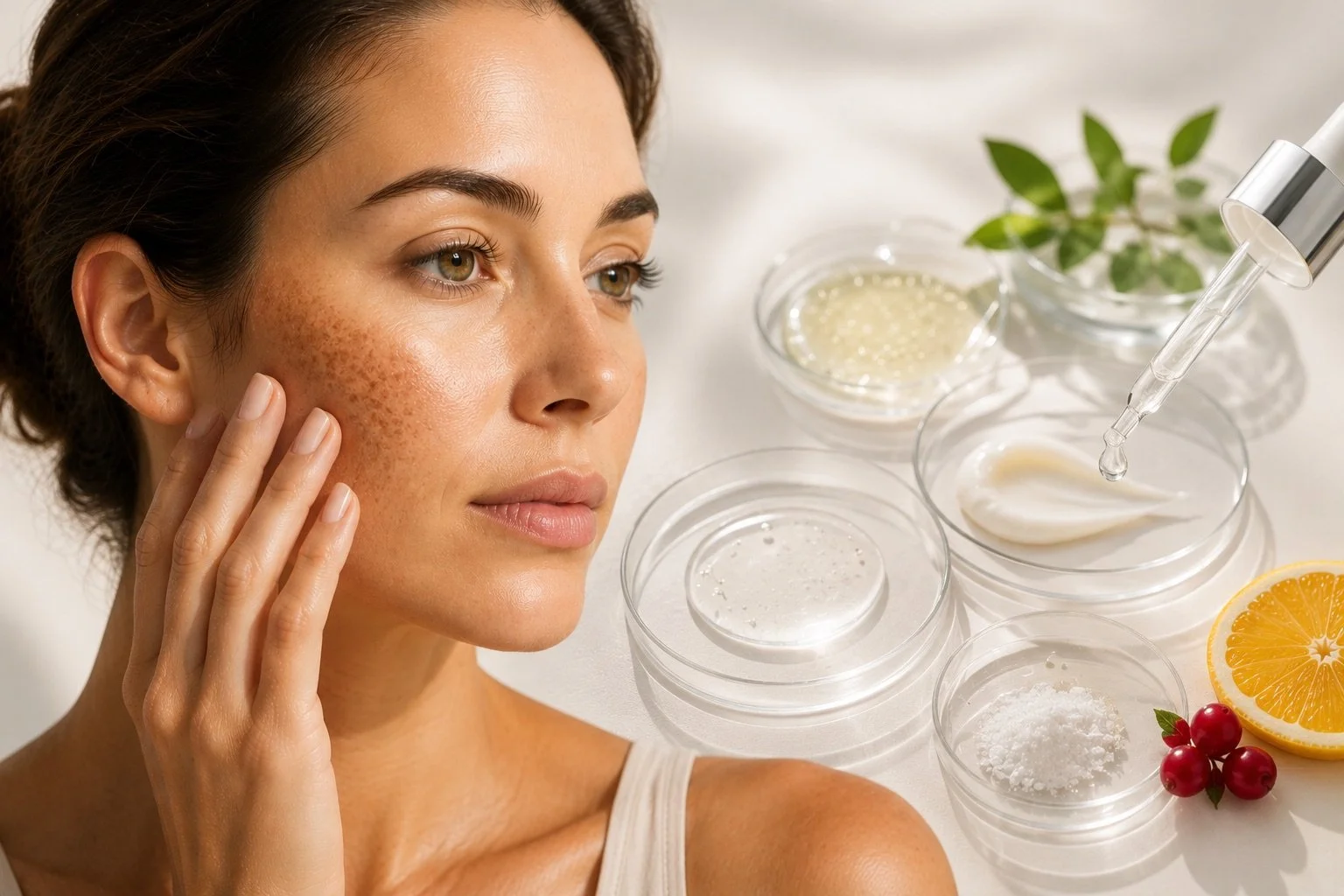
Choosing Skincare for Pigmentation: Which Ingredients Actually Work?
Walk into almost any pharmacy or skincare store and you'll find dozens of products claiming to brighten the complexion, fade dark spots or reduce pigmentation.
Most contain one or more active ingredients with scientific names that sound impressive. Vitamin C. Niacinamide. Tranexamic acid. Retinol. Alpha arbutin. Cysteamine. Patients often ask me which one works best.
The answer is that no ingredient treats every type of pigmentation, because pigmentation itself is not a single condition.
Different biological pathways stimulate melanocytes, and different ingredients influence those pathways in different ways. Choosing skincare therefore becomes less about finding the "strongest" product and more about selecting ingredients that match the diagnosis, the skin type and the treatment goals.
There Is No Single Pigmentation Pathway
Melanin production, known as melanogenesis, is a remarkably complex biological process. Ultraviolet radiation stimulates melanocytes directly. Inflammation releases signalling molecules that encourage further pigment production. Hormonal influences increase melanocyte activity in susceptible individuals. Oxidative stress generated by sunlight and environmental exposure also contributes.
No single ingredient blocks every one of these pathways.
This is why combination therapy often produces better results than relying on a single serum. Different ingredients can complement one another by targeting different aspects of melanogenesis while also improving skin quality and barrier function.

Vitamin C: More Than an Antioxidant
Vitamin C is probably the best-known skincare ingredient for pigmentation, although its role is often simplified.
Most people recognise vitamin C as an antioxidant, and that description is pretty accurate. By helping neutralise free radicals generated by ultraviolet radiation, vitamin C reduces one of the signals that stimulates melanocytes.
Laboratory and clinical studies suggest appropriately formulated vitamin C may also influence melanin production while supporting collagen synthesis. This makes it particularly attractive for patients managing pigmentation alongside early photoageing, where improving overall skin quality is just as important as reducing dark spots.
Not every vitamin C formulation behaves the same way though. Stability, concentration and formulation all influence effectiveness, which explains why two products containing "vitamin C" may perform very differently. For many patients, vitamin C is an excellent morning ingredient because it complements sunscreen rather than replacing it.
Niacinamide: Supporting Healthy Skin While Reducing Pigment Transfer
Niacinamide has become increasingly popular over recent years, and with good reason. Unlike some active ingredients that work primarily by increasing skin turnover, niacinamide helps strengthen the skin barrier while reducing the transfer of melanin from melanocytes into surrounding skin cells. This dual action makes it particularly useful for patients whose pigmentation is accompanied by sensitivity, dryness or impaired barrier function.
Its excellent tolerability also allows it to be combined with many other active ingredients, making it a valuable component of longer-term pigmentation management rather than a quick fix.
Retinoids: Improving Skin Renewal
Retinoids have been used in dermatology for decades. Their effects extend well beyond pigmentation. By increasing epidermal turnover, retinoids gradually encourage the removal of melanin-containing skin cells while improving overall skin texture and reducing many of the visible features of photoageing.
Patients often notice smoother skin and improved fine lines alongside gradual improvement in uneven pigmentation.
Like many effective treatments, retinoids require patience. Introducing them too quickly can cause irritation, which may actually worsen pigmentation in susceptible individuals through post-inflammatory hyperpigmentation. Careful introduction and appropriate moisturisation usually produce better long-term results than pursuing rapid improvement.
Azelaic Acid
Although azelaic acid is commonly associated with rosacea, it also has an important place in pigmentation management. It can reduce melanocyte activity while simultaneously addressing inflammation, making it particularly useful for patients whose pigmentation developed following acne or inflammatory skin conditions.
Its relatively favourable tolerability profile also makes it a useful option for patients who struggle with stronger topical treatments.
Tranexamic Acid
Tranexamic acid has emerged as one of the more significant developments in pigmentation management over the past decade, particularly in patients with melasma. I have used it for years to control significant bleeding in my emergency department patients.
Research suggests it influences several pathways involved in melanogenesis rather than acting through a single mechanism. Both topical and oral formulations have demonstrated benefit in selected patients, although oral treatment requires medical assessment because it is not appropriate for everyone.
As our understanding of melasma continues to evolve, tranexamic acid has become an increasingly valuable component of combination treatment plans.
Other Pigment-Modulating Ingredients
Several additional ingredients have demonstrated varying degrees of clinical benefit.
Alpha arbutin may reduce melanin production through its effects on tyrosinase, an enzyme central to melanogenesis.
Kojic acid has been used for many years as another tyrosinase inhibitor, although irritation limits its suitability for some patients.
Cysteamine has generated increasing interest in recent years, particularly for melasma, and clinical studies suggest it may offer meaningful improvement in carefully selected patients.
These ingredients all have potential roles within pigmentation management. Their value depends less on marketing claims than on selecting the right ingredient for the right patient.
Why Stronger Isn't Always Better
One of the most common mistakes I see is introducing multiple active ingredients simultaneously. Patients understandably want to accelerate improvement, so they combine vitamin C, retinoids, exfoliating acids and pigment serums within the same routine. Unfortunately, irritated skin rarely produces better results.
Inflammation itself stimulates melanocytes. If the skin barrier becomes compromised, ongoing irritation may counteract many of the benefits those active ingredients were intended to provide. This is one reason why gradual introduction often produces better long-term outcomes than aggressive treatment.
Putting the Science Into Practice
Once the diagnosis has been established and the biological drivers identified, the next step is selecting products that address those processes. This is where skincare becomes highly individual.
For patients with significant cumulative sun exposure, antioxidant protection often becomes a priority. A stable vitamin C formulation such as Alastin C-RADICAL Defense Antioxidant Serum may be incorporated into the morning routine alongside broad-spectrum SPF50+ sunscreen to help address oxidative stress while supporting overall skin quality.
Where pigmentation is accompanied by dehydration or impaired barrier function, strengthening the skin barrier frequently becomes equally important. Depending on the individual's skin type, this may involve products such as Aspect DR Ceramide Serum, Alastin HA Immerse Serum, or selected Rejuran skincare to improve hydration and support tolerance of active ingredients.
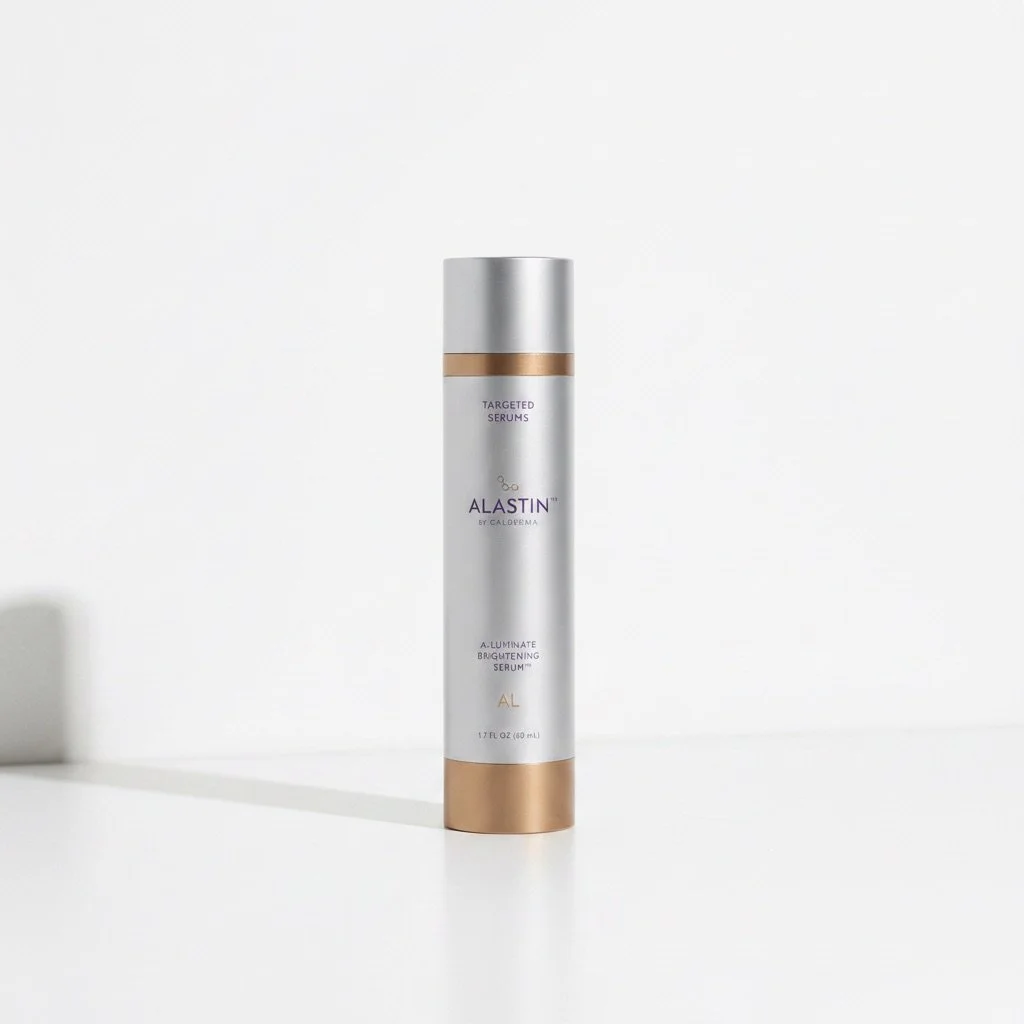
Some patients (myself included) benefit from introducing pigment-targeting formulations such as Alastin A-LUMINATE Brightening Serum, while others require prescription-strength therapies that cannot be obtained over the counter.
The product itself is never the starting point, the diagnosis is. Once the biology is understood, selecting appropriate skincare becomes much more straightforward.
Building an Effective Routine
The most successful pigmentation routines are usually not the most complicated. They combine a small number of evidence-supported ingredients, introduced thoughtfully, with consistent photoprotection and realistic expectations.
For some patients, that may be all that is required. For others, skincare provides the foundation upon which prescription therapies or procedural treatments can be added.
Understanding where skincare fits within the broader treatment plan is often the difference between continually changing products and making steady, sustainable progress.
In the next article, we'll bring these concepts together by looking at how I build personalised skincare routines for different types of pigmentation, and why two patients with seemingly similar brown spots may leave the consultation with completely different treatment plans.