

Fat Loss, Muscle Loss and Skin Quality: What Happens During Weight Loss?
Weight loss is usually measured in kilograms.
The number changes. Clothing fits differently. Many people notice improvements in energy, confidence and overall health. However, the body does not simply lose “weight”.
Changes on the scale represent a combination of changes occurring across different tissues. Ideally, weight reduction involves a reduction in excess body fat while preserving the structures that support long-term health, including muscle. As more people achieve significant weight reduction through lifestyle changes and medical treatments including GLP-1 medications, there has been growing discussion around not only how much weight is lost, but what happens to the body during that process.
Weight Loss and Body Composition
When people talk about losing weight, they are usually referring to reducing excess body fat. Fat reduction, particularly around internal organs (visceral fat), can have important benefits for metabolic health, but weight alone does not describe everything happening within the body.
Weight alone does not show what is happening beneath the surface. During weight loss, the body is adapting across multiple systems. The amount of fat reduced, the amount of muscle maintained, nutritional intake, exercise habits and age-related changes all influence the final outcome. This is why modern weight management increasingly considers body composition, rather than focusing only on the number shown on the scales.
Why Muscle Preservation Matters
Muscle is often associated with exercise, strength or athletic performance, but its importance extends far beyond movement.
Skeletal muscle is one of the largest metabolically active tissues in the body. It plays an important role in glucose regulation, energy metabolism, physical function and maintaining resilience as we age. From mid-adulthood onwards, muscle mass and strength gradually decline. This process, known as sarcopenia, is one of the major biological changes associated with ageing.
Research increasingly shows that maintaining muscle is linked with healthier ageing. A study published in the American Journal of Medicine examining older adults found that higher muscle mass was associated with lower all-cause mortality, suggesting that body composition may provide important information beyond weight alone.
Other research has demonstrated that muscle strength itself is a powerful predictor of ageing outcomes. Studies examining older populations have shown that reduced muscle strength is associated with increased mortality risk, independent of factors such as body size and physical activity levels.
This changes the way we think about weight loss. The focus shifts from simply becoming lighter to maintaining the tissues that support long-term health. During significant weight reduction, particularly when weight loss occurs quickly, preserving muscle becomes an important consideration. Adequate dietary protein and resistance-based exercise are commonly recommended because they help maintain strength, function and healthy body composition.
For people using modern weight management treatments, including GLP-1 medications, this conversation has become increasingly important. Successful ageing is not only reflected by what we lose. It is also influenced by what we preserve.
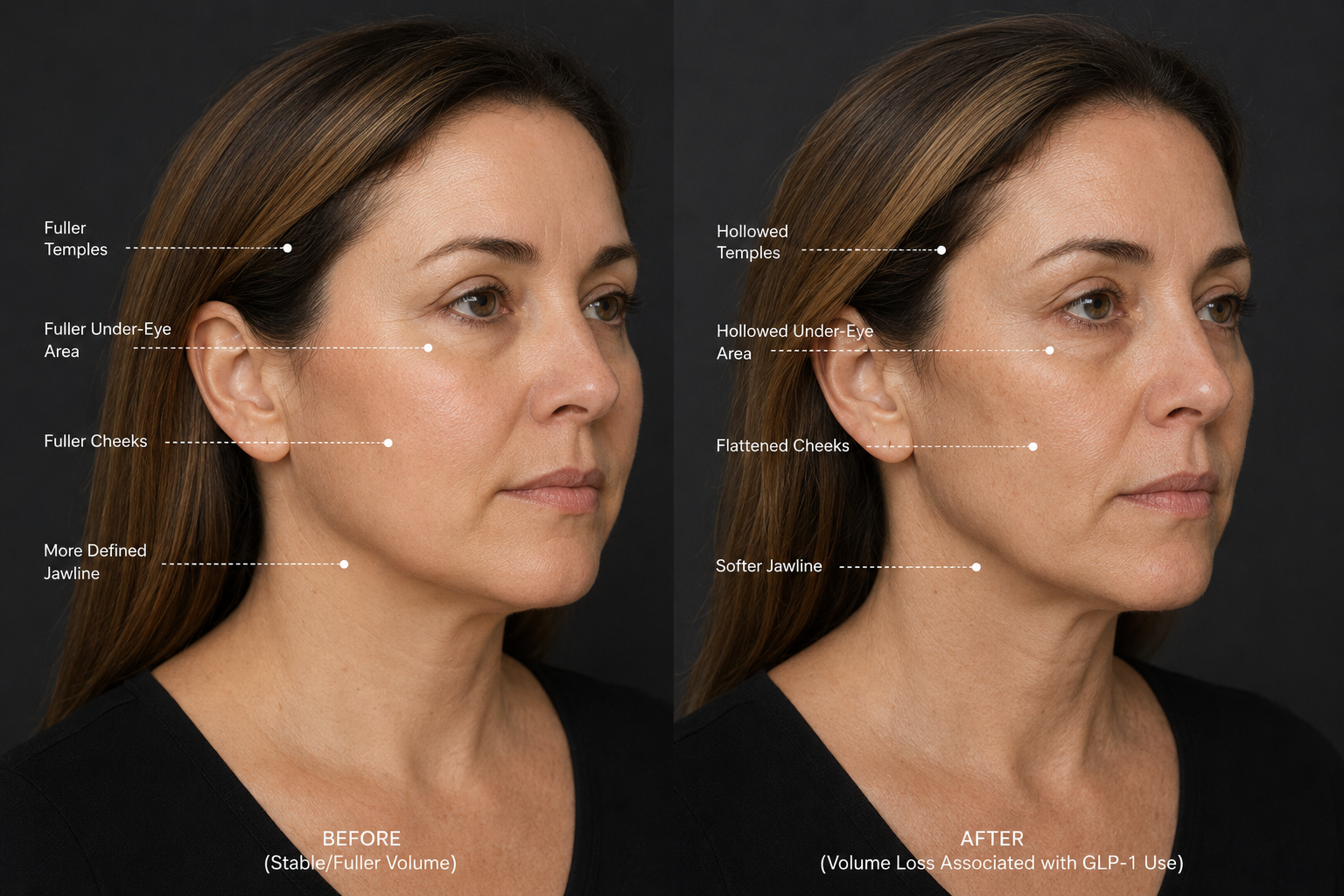
Why the Face Changes During Weight Loss
Age-related facial changes usually occur gradually. Small changes in volume, support and skin quality accumulate over many years, which means they may not be obvious day to day. Significant weight loss can alter this balance.
As facial volume reduces, underlying structural changes may become more apparent. Areas that previously had more support may appear flatter, while existing changes around the cheeks, under-eye region or lower face can become easier to see. The way the face responds is influenced by multiple factors, including underlying anatomy, genetics, age, skin quality and the degree of weight change.
Skin Quality and Weight Loss
Skin also needs to adapt when the body changes. Healthy skin relies on an organised support network within the dermis. Collagen provides strength and structure, while elastin contributes to the skin’s ability to stretch and return to shape. Over time, this support network changes.
Collagen production slows, collagen fibres become more fragmented. Environmental factors such as ultraviolet exposure, smoking, inflammation and lifestyle factors over the years can influence how these changes occur.
When significant weight loss occurs, the skin is adapting at the same time that its underlying support is changing. Some people find their skin adjusts well, while others notice reduced firmness, changes in texture, fine lines or increased looseness. Focusing only on lost facial volume can miss an important part of the ageing process.
Nutrition, Repair and Healthy Tissue
The same principles that support the body during weight loss also influence the tissues involved in ageing. Muscle, skin and connective tissue are constantly undergoing processes of maintenance and repair. Protein provides amino acids that contribute to many of these structures, including muscle and collagen-containing tissues. Sleep, physical activity, hormonal changes, inflammation and general health all influence how effectively the body responds to change.
There is no single factor that controls ageing, but maintaining healthy tissue becomes increasingly important during periods of significant physical change.
Understanding What Has Changed
Facial changes after weight loss are usually the result of several processes occurring together. Changes in facial volume, collagen support, skin quality and the normal ageing of deeper structures all influence the way the face changes over time. This is why looking only at one feature can be misleading.
A hollow area, a deeper fold or a change in facial contour may represent more than simply lost volume. Understanding the underlying cause allows a more considered approach.
At Cosmenon, I begin with a detailed assessment of your facial structure, skin quality and ageing pattern. This helps guide a discussion about which options may be appropriate for your individual concerns, rather than assuming every change requires the same solution.