

Inflammation and Healthy Ageing:
The Biology Behind How We Grow Older
Inflammation has an important role in human health.
Without it, wounds would not heal, infections would be harder to overcome and damaged tissues would struggle to repair themselves.
The immune system depends on inflammation to protect us.
The picture becomes different when inflammatory activity remains persistently elevated over many years. Rather than responding to an injury or infection before settling again, the immune system can maintain a low level of activation that gradually influences multiple organs throughout the body. Researchers have termed this process “inflammaging” - a combination of inflammation and ageing.
Although largely invisible, it has become one of the central concepts in modern ageing research.
Ageing and the Immune System
The immune system changes throughout adult life. Some components become less effective at recognising and responding to new threats, while others remain chronically active. This gradual shift contributes to a persistent state of low-grade inflammation that differs from the intense inflammation seen during infection or injury.
Blood tests may remain entirely normal. Most people feel well. Yet small changes in inflammatory signalling continue to influence tissues over decades.
This background inflammatory state has been associated with cardiovascular disease, type 2 diabetes, frailty, osteoporosis, sarcopenia, neurodegenerative disease and many other conditions that become more common with increasing age.
Rather than causing these conditions independently, inflammation appears to interact with many of the biological pathways that influence how tissues age and recover.
What Does Inflammation Do to the Skin?
Our skin reflects many of the same biological processes occurring elsewhere in the body.
Healthy skin depends on an organised extracellular matrix rich in collagen, elastin and other structural proteins. Fibroblasts continually maintain this environment, repairing existing collagen while producing new collagen where required.
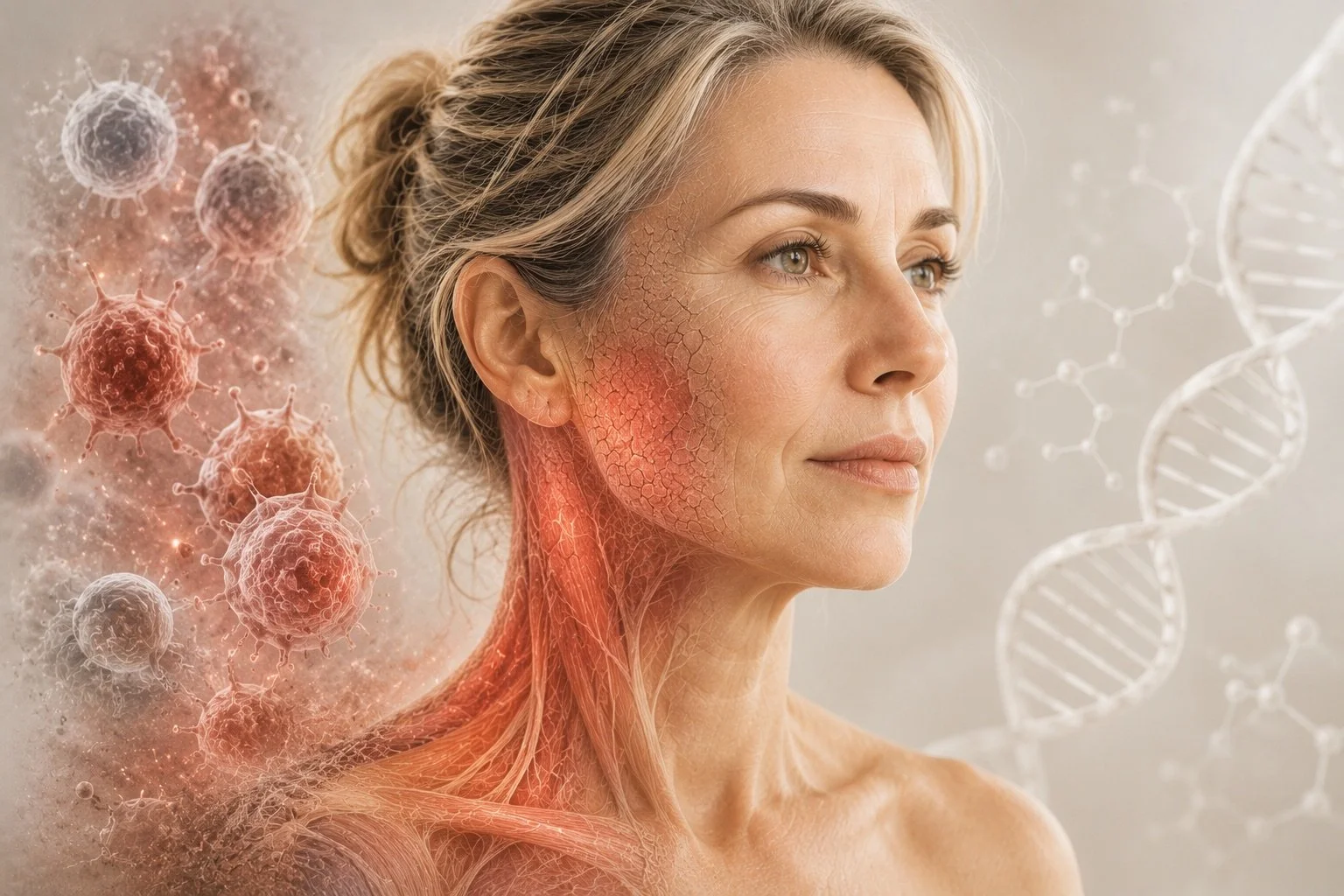
Inflammatory signalling influences these cells. When inflammation becomes prolonged, enzymes known as matrix metalloproteinases become more active. These enzymes contribute to collagen breakdown while reducing the balance between degradation and repair.
Ultraviolet radiation provides a clear example.
Exposure to ultraviolet light activates inflammatory pathways within the skin, increasing collagen degradation while simultaneously reducing new collagen production. Repeated exposure over many years contributes to photoageing, pigmentation changes, reduced elasticity and the gradual loss of dermal support.
Inflammation therefore becomes one of the biological links between environmental exposure and visible skin ageing.
Inflammation Extends Beyond the Skin
The effects of chronic inflammation are not confined to facial ageing. Muscle tissue, blood vessels, bone, the brain and metabolic organs are all influenced by inflammatory signalling. This helps explain why many of the habits associated with healthy ageing appear repeatedly throughout medical research.
Regular physical activity reduces inflammatory markers.
Adequate sleep supports immune regulation.
Smoking increases oxidative stress and inflammatory activity.
Visceral adipose tissue acts as a metabolically active organ capable of producing inflammatory cytokines.
Nutrition influences both metabolic health and immune function.
Each factor contributes only part of the picture, although together they shape the biological environment in which tissues age.
Why This Matters in Aesthetic Medicine
Many people think about ageing only after visible changes appear. By that stage, the biological environment that produced those changes has often been developing for decades. Cosmetic treatments may improve specific concerns, although they do not replace the importance of maintaining healthy tissues.
Collagen responds to its surrounding environment. Muscle depends on ongoing metabolic health. Skin repair reflects circulation, nutrition, inflammation and immune function.
Facial ageing becomes more than a collection of wrinkles, folds or volume changes. It reflects the condition of living tissues that have adapted to genetics, environment, lifestyle and time.
Supporting those tissues before extensive change develops provides opportunities that no cosmetic procedure can fully recreate later.
Looking Beyond Individual Treatments
Modern aesthetic medicine offers an expanding range of procedures capable of improving skin quality, restoring structural support and addressing age-related changes. Those treatments have an important place when they are selected thoughtfully.
Healthy ageing begins much earlier.
Daily sun protection, regular physical activity, maintaining muscle, eating well, sleeping adequately and avoiding smoking influence the biological processes that determine how tissues age long before treatment is considered.
When viewed together, these decisions become more than healthy habits. They help shape the environment in which every cell, every collagen fibre and every repair process operates throughout adult life.