

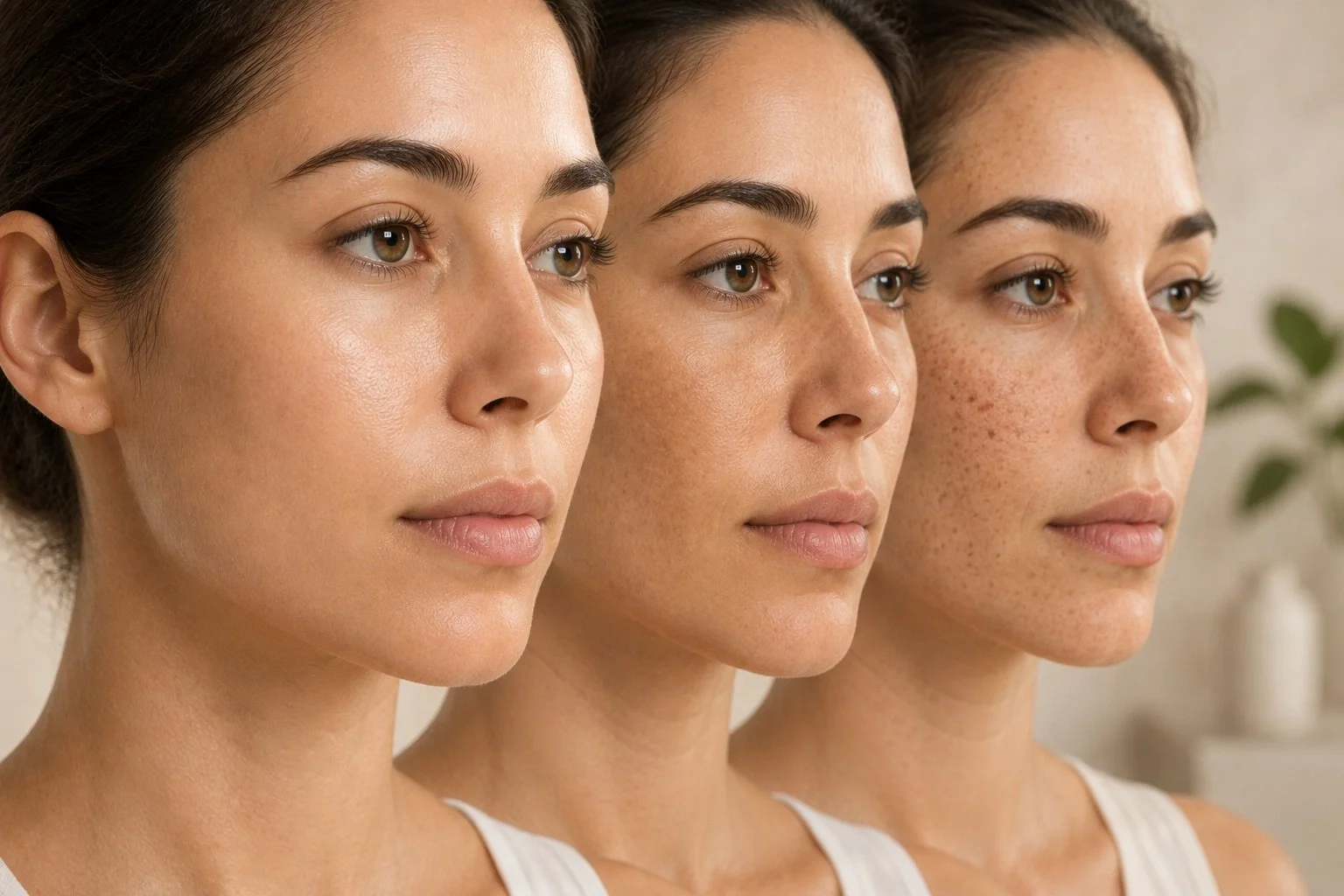
Understanding Skin Pigmentation
Skin pigmentation is one of the most common reasons people seek advice about their appearance. It may begin as a small brown spot on the cheek, patches that seem to appear after pregnancy, marks left behind by acne, or an uneven skin tone that slowly becomes more noticeable over the years.
Many people describe all of these changes simply as "pigmentation."
From a medical perspective, however, pigmentation is not a diagnosis. It is a visible sign that the skin has produced or retained more melanin than usual. I think understanding why that has happened is more important than deciding which cream or treatment to use.
This is one of the reasons pigmentation can be frustrating. Two people may appear to have very similar brown patches, yet one improves with simple skincare while the other requires prescription treatment or procedural intervention.
Understanding How Skin Produces Pigment
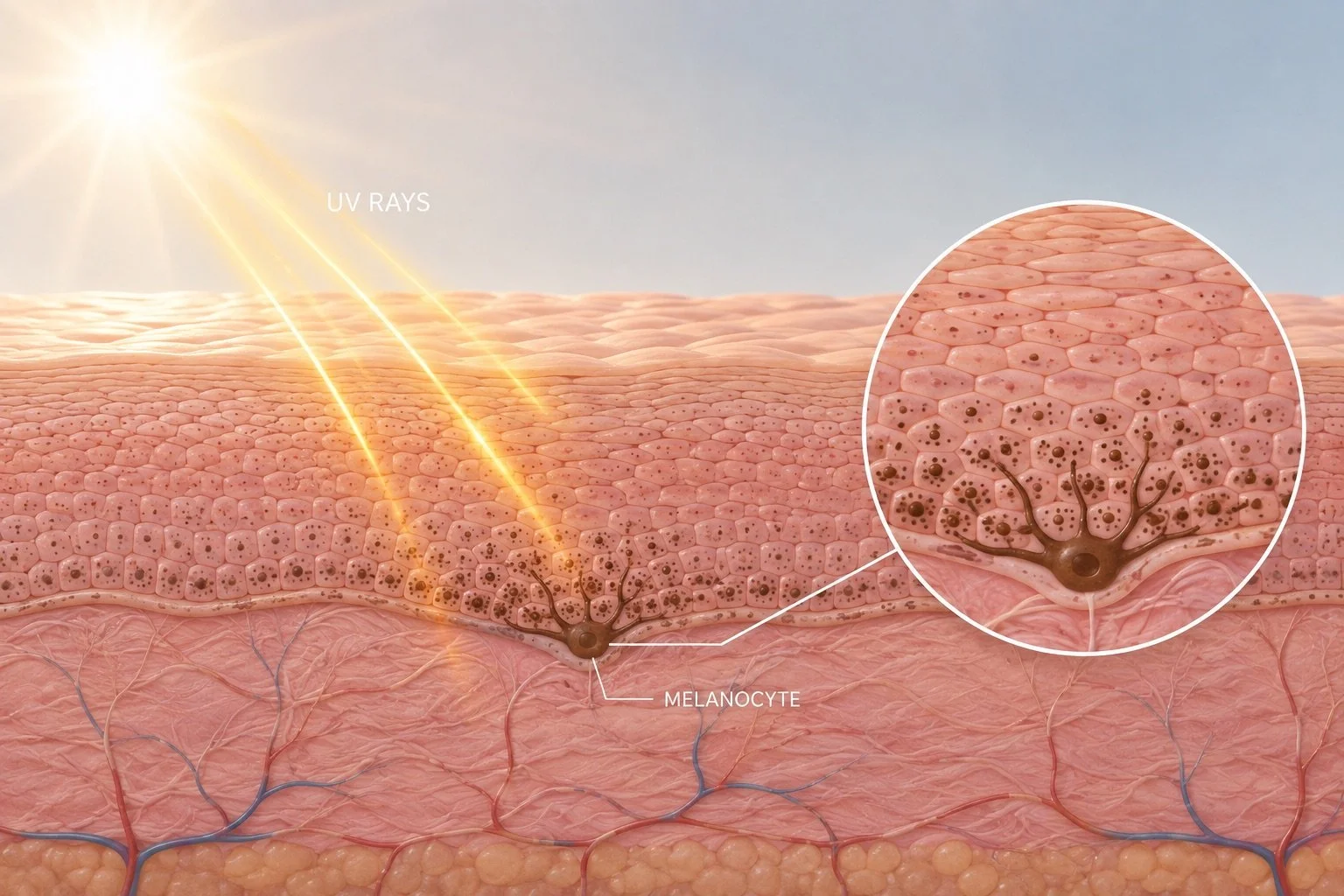
Melanin is the natural pigment that gives skin, hair and eyes their colour. It is produced by specialised cells called melanocytes, which sit along the deepest layer of the epidermis. Melanin is not a problem. It is one of the body's most important protective mechanisms.
When ultraviolet radiation reaches the skin, melanocytes respond by producing additional melanin. That pigment is transferred into surrounding skin cells where it helps absorb ultraviolet energy before it can damage DNA. A suntan is simply the visible result of this protective response. Most of the time, this system works remarkably well.
Pigmentation develops when melanocytes become overactive, remain stimulated for longer than they should, or begin producing melanin unevenly across the skin. Instead of an even complexion, darker patches gradually appear.
The important thing to remember is that melanocytes respond to many signals, not just sunlight.
Inflammation, hormonal changes, visible light, ageing, heat and certain medications can all stimulate pigment production. Several of these factors often occur together, which explains why pigmentation can become increasingly difficult to manage over time.
Pigmentation Is a Symptom, Not a Diagnosis
The brown spot that developed after years of outdoor work is biologically different from the pigmentation that appeared after acne. Melasma follows different pathways again, while freckles represent an entirely separate process.
Although these conditions may appear similar in the mirror, they develop for different reasons and respond differently to treatment.
This is why generic skincare advice often produces disappointing results. Products recommended for one type of pigmentation may have very little effect on another.
A consultation therefore begins by identifying the diagnosis before discussing ingredients, procedures or skincare routines.
The Most Common Types of Pigmentation
Solar Lentigines
Often referred to as “sun spots” or “age spots”, solar lentigines develop after years of cumulative ultraviolet exposure.
Although they often become more noticeable with age, they are not caused by ageing itself. They represent areas where melanocytes have responded repeatedly to decades of sun exposure.
Solar lentigines commonly appear on areas that receive the greatest lifetime ultraviolet exposure, including the face, chest, shoulders and backs of the hands.
Many patients notice them becoming more obvious during their forties and fifties, despite the underlying damage occurring much earlier in life.
Post-Inflammatory Hyperpigmentation
The skin has a remarkable ability to remember inflammation. Acne, eczema, rosacea, insect bites, burns, injuries and even some cosmetic procedures can all stimulate melanocytes during the healing process. Once the original inflammation settles, excess pigment may remain behind. This process is known as post-inflammatory hyperpigmentation.
It is particularly common in patients with darker skin phototypes, where melanocytes tend to respond more vigorously to inflammatory signals.
An important principle follows from this observation; If ongoing inflammation is not controlled, new pigmentation continues to develop even while existing pigmentation is being treated.
Melasma
Melasma behaves differently again.
Rather than isolated brown spots, melasma usually produces larger, symmetrical patches affecting the cheeks, forehead, temples or upper lip.
Hormonal influences frequently contribute, particularly during pregnancy or while taking hormonal medications, although ultraviolet radiation, visible light and heat all appear to stimulate melanocytes in susceptible individuals.
Melasma also has a tendency to recur. Patients sometimes become discouraged when pigmentation improves after treatment only to gradually return months later. In reality, this reflects the chronic nature of the condition rather than treatment failure.
Successful management usually focuses on long-term control rather than permanent removal.
Freckles
Freckles are genetically determined areas of increased pigmentation that darken following ultraviolet exposure. Unlike many other pigment disorders, freckles are entirely benign and often fade during periods of reduced sun exposure.
Although they usually require no treatment, they serve as a useful reminder that the skin is responding to ultraviolet radiation and reinforce the importance of consistent photoprotection.
Why Pigmentation Often Returns
Here’s the frustrating part - pigmentation can recur. You need to know what created the pigmentation in the first place.
Removing visible pigment does not necessarily remove the biological signals that instructed melanocytes to produce it.
If ultraviolet exposure continues, melanocytes remain active.
If inflammation continues, new pigment may develop.
If hormonal influences remain unchanged, melanogenesis may continue beneath the surface.
For this reason, successful pigmentation management usually involves two separate goals. The first is reducing the pigment that already exists. The second is reducing the biological signals that continue to stimulate pigment production. Long-term improvement depends on both.
Looking Beyond the Brown Spots
Pigmentation rarely exists in isolation. Many patients also notice changes in skin texture, collagen quality, fine lines, vascular changes and the broader effects of cumulative sun exposure. This is why I rarely think about pigmentation as a single cosmetic concern. Instead, it becomes part of a broader assessment of skin health.
Improving skin quality, supporting barrier function, protecting against further ultraviolet damage and reducing unnecessary inflammation can produce more natural, sustainable improvements than simply chasing darker spots with increasingly stronger products.
In the next article, we'll look more closely at one of the most misunderstood aspects of pigmentation management: why sunscreen, visible light and daily photoprotection remain the foundation of every successful treatment plan, regardless of which skincare products or procedures are used.