

When Skincare Isn't Enough: Understanding Professional Treatment Options for Pigmentation
"How long should I wait before considering treatment?"
Some forms of pigmentation respond well to carefully selected skincare alone. Others improve only modestly because the pigment sits deeper within the skin or because the biological signals driving pigment production remain active.
Understanding where skincare reaches its limits helps explain why professional treatments sometimes become an important part of the management plan.
The Limits of Topical Skincare
Even the most effective skincare products work within the upper layers of the skin. They can reduce oxidative stress, influence melanocyte activity, improve epidermal turnover, strengthen the skin barrier and reduce inflammation.
These are meaningful biological effects, but they cannot always remove established pigment that has accumulated over many years, nor can they reverse decades of cumulative sun damage.
This is why some patients plateau after an initial period of improvement. Their skincare continues to support healthy skin function, but further progress requires a different approach.
Choosing the Right Procedure Begins With the Diagnosis
One of the biggest misconceptions in cosmetic medicine is that every pigment problem should be treated with the same device. In reality, pigmentation procedures are highly diagnosis dependent. Treating solar lentigines as though they were melasma can produce disappointing results. Treating melasma too aggressively may actually worsen the condition.
This is why identifying the type of pigmentation remains the most important step before discussing procedures.
Chemical Peels
Chemical peels work by producing controlled exfoliation of the epidermis. As the outer layers of the skin renew, excess pigment contained within superficial skin cells is gradually removed. Some peels also stimulate biological changes that improve epidermal turnover and contribute to a more even skin tone. Patients often notice broader improvements beyond pigmentation, including smoother texture and brighter-looking skin. Not every patient requires a peel, and not every peel is appropriate for every skin type. Selecting the correct formulation, depth and treatment interval remains far more important than choosing the strongest peel available.
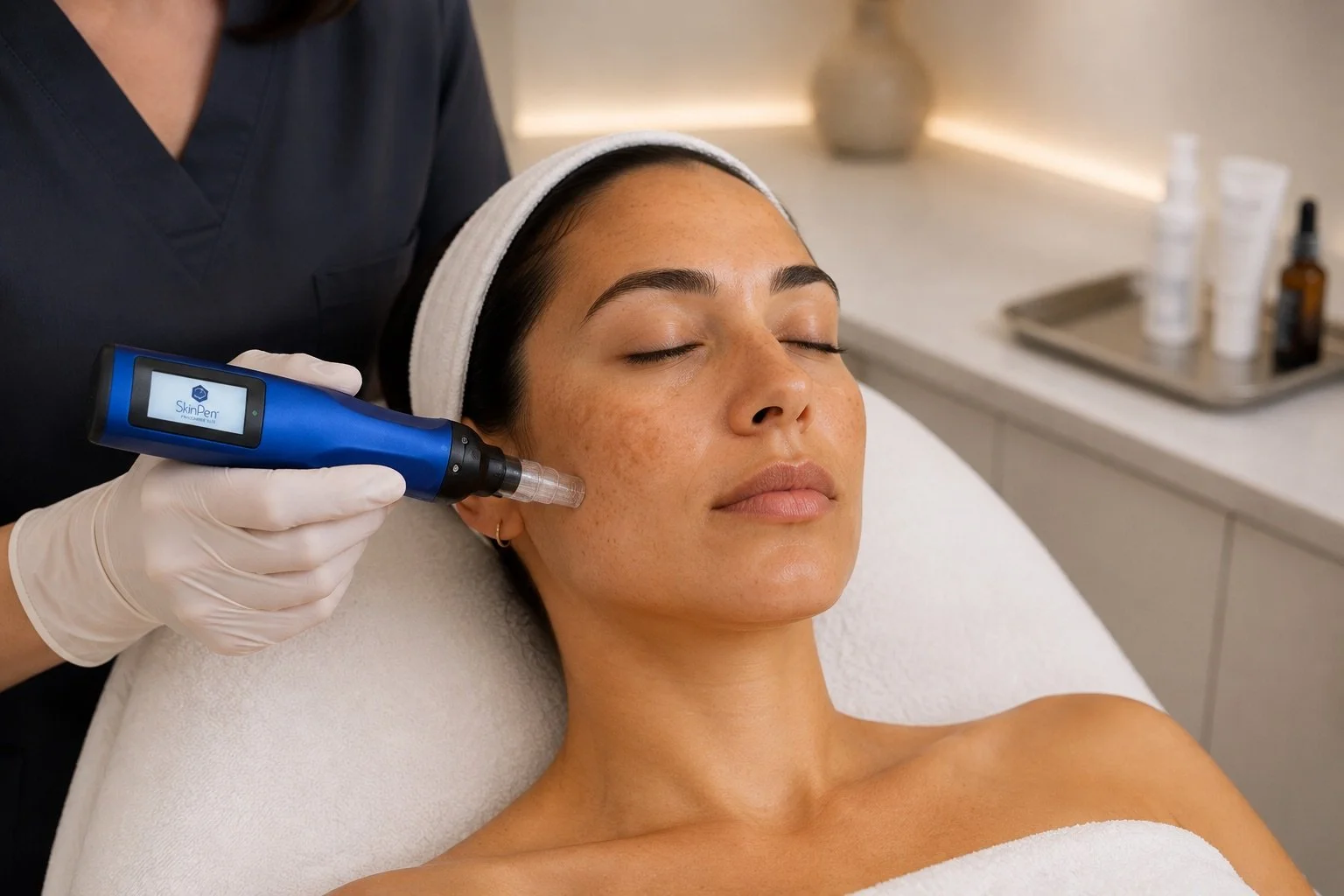
Microneedling
Patients are sometimes surprised to see microneedling discussed alongside pigmentation. The primary role of microneedling is improving skin quality through controlled stimulation of wound-healing pathways. For selected patients, this can indirectly improve uneven pigmentation by enhancing epidermal renewal and supporting healthier skin function. Microneedling is particularly valuable when pigmentation occurs alongside textural change, early photoageing or superficial acne scarring. It should not be viewed as a universal pigmentation treatment, nor is it appropriate for every pigment disorder. As with all procedures, patient selection matters.
Intense Pulsed Light (IPL)
IPL uses broad-spectrum light to target specific chromophores within the skin, including melanin. For carefully selected patients with diffuse photodamage and multiple superficial solar lentigines, IPL can produce impressive improvements in overall skin tone while simultaneously addressing vascular changes associated with chronic sun exposure. Patients frequently describe their complexion as appearing clearer and more even after treatment. IPL is generally less suitable for melasma because the inflammatory response generated by treatment may stimulate melanocytes and contribute to recurrence. The diagnosis therefore determines whether IPL is an excellent choice or one that should be avoided.
Laser Treatment
Laser technology allows energy to be delivered with considerably greater precision than topical skincare. Different wavelengths target different structures within the skin, which means no single laser treats every form of pigmentation. Some lasers are particularly effective for discrete solar lentigines. Others target deeper pigment or associated vascular abnormalities. Choosing the appropriate device requires understanding both the diagnosis and the patient's skin type. The most powerful laser is rarely the best laser. Selecting the appropriate technology for the individual patient consistently produces better outcomes than pursuing increasingly aggressive treatment.
Prescription Therapy
Some forms of pigmentation require medical treatment rather than cosmetic skincare. Prescription-strength hydroquinone remains one of the most effective topical depigmenting agents available for selected patients, although it requires careful supervision because prolonged inappropriate use may produce unwanted complications. Topical retinoids continue to play an important role for many patients with photoageing and pigmentation. For melasma, carefully selected patients may benefit from topical or oral tranexamic acid as part of a broader treatment strategy. These medications are prescribed because of the diagnosis, not because pigmentation happens to be present.
Combination Treatment Often Produces the Best Results
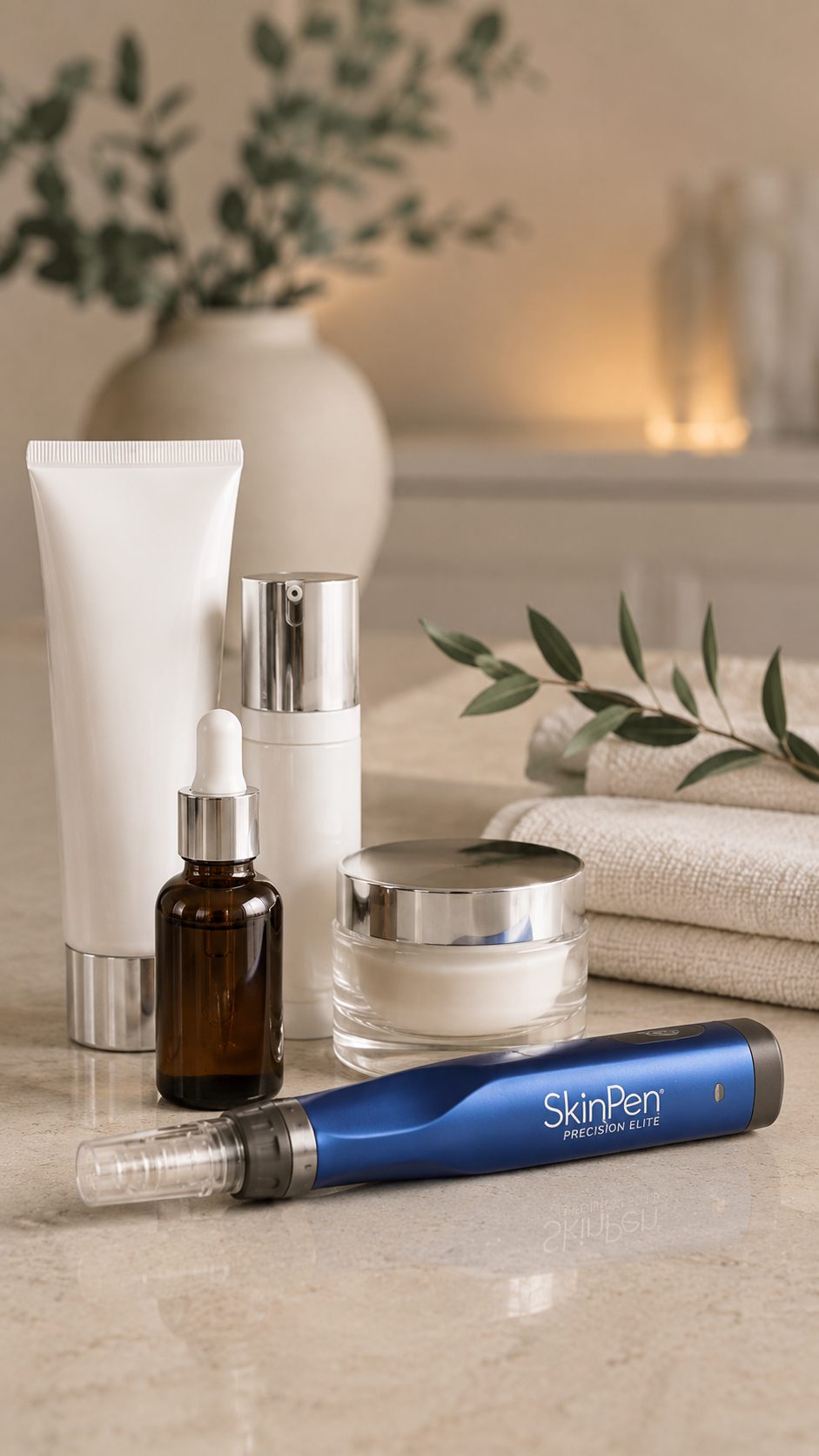
The most successful pigmentation management plans rarely rely on a single treatment. Instead, several complementary approaches are combined. Daily photoprotection reduces ongoing melanocyte stimulation. Professional skincare supports barrier function, improves skin quality and targets biological pathways involved in melanogenesis. Prescription medicines may suppress pigment production more effectively in selected patients. Procedures address pigment that skincare alone cannot remove. Each component contributes something different, and none is intended to replace the others.
Recovery Is Part of Treatment
One aspect of pigmentation management that receives relatively little attention is recovery. The skin undergoes a carefully coordinated healing response after many procedures. Supporting that process helps optimise outcomes while reducing unnecessary inflammation that could potentially contribute to post-inflammatory hyperpigmentation.
Depending on the procedure performed and the individual's skin, this may include products designed to support barrier repair, hydration and recovery.
Following laser treatment, chemical peels or microneedling, products such as Alastin Skin Nectar and INhance Serum, may be appropriate as part of the post-procedure plan.
The specific products matter less than the biological principles behind them. The objective is to help the skin recover efficiently while maintaining a healthy barrier during healing.
Procedures Do Not Replace Good Skincare
One of the most persistent myths in aesthetic medicine is that procedures eliminate the need for skincare.
Professional treatments often produce the most noticeable improvements, but those improvements are maintained through consistent skincare and ongoing photoprotection. Without daily sunscreen, melanocytes continue responding to ultraviolet exposure. Without barrier support, irritation may limit tolerance of active ingredients. Without maintenance, many pigment disorders gradually recur.
Procedures should therefore be viewed as one component of a long-term management strategy rather than a permanent solution.
Building a Long-Term Plan
When patients ask me which treatment they need, my answer is usually that they need a plan rather than a procedure. That plan begins with an accurate diagnosis.
It considers the biology responsible for the pigmentation, the health of the skin barrier, the degree of photodamage, lifestyle factors, recovery time and the patient's goals.
Only then does it become clear whether skincare alone is appropriate or whether prescription therapy, chemical peels, microneedling, IPL or laser treatment are likely to improve the outcome.
Successful pigmentation management is rarely about finding one perfect treatment. It is about selecting the right combination of treatments at the right time and supporting those treatments with healthy skin biology over the months and years that follow.