

Why Healthy Skin Often Looks Younger
Most people recognise healthy skin immediately.
Patients frequently tell me they want their skin to look fresher, healthier or more youthful. When I ask what they mean, the answers are often surprisingly similar. They describe skin that appears hydrated, even and bright.
They are usually responding to an overall impression rather than a single feature.
Why does healthy skin look younger?
The Characteristics We Associate With Healthy Skin
When a patient walks into my clinic with excellent skin quality, there are several characteristics I tend to notice immediately.
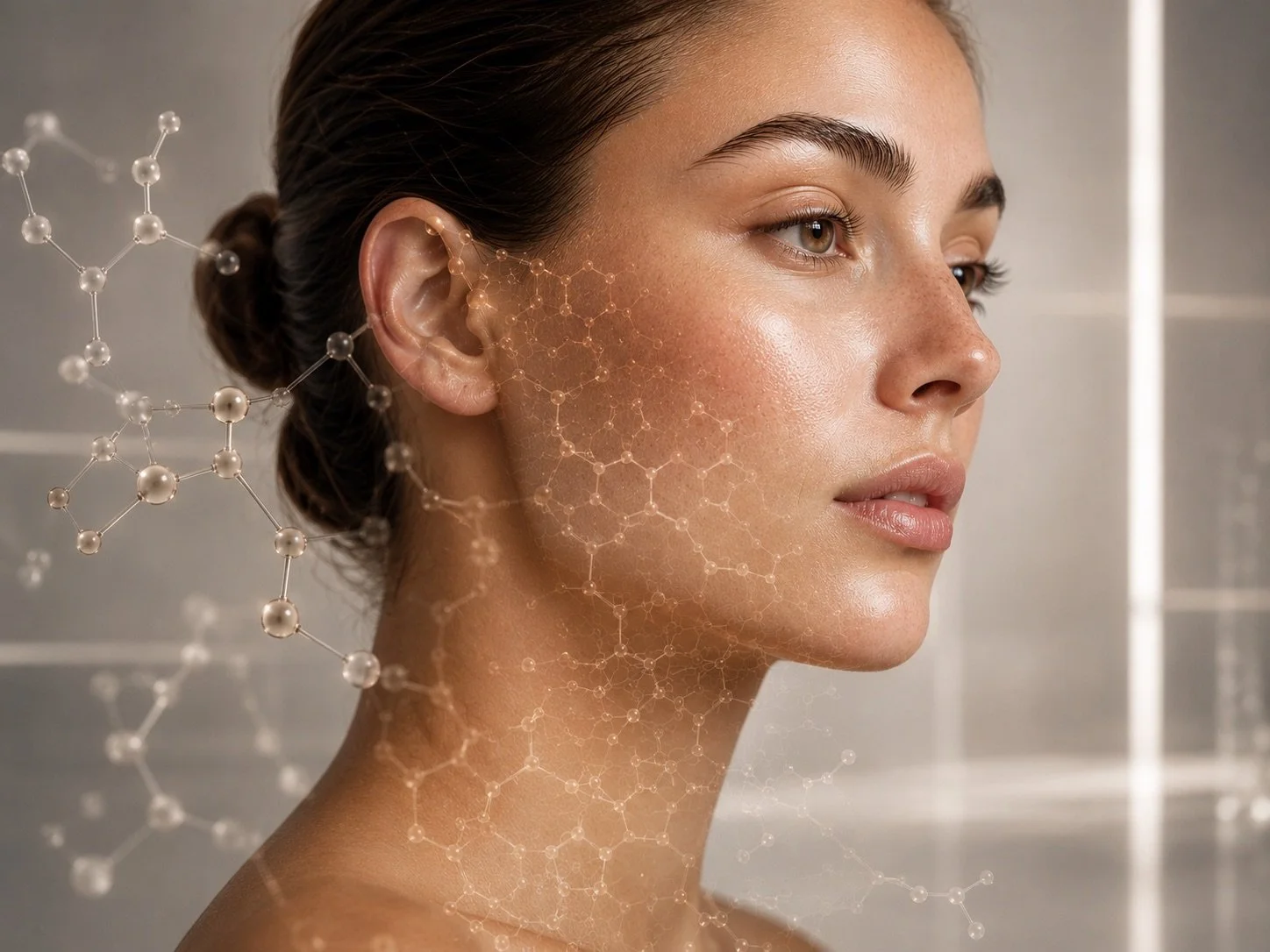
The skin appears hydrated, skin tone is relatively even and there is minimal redness. Pigmentation is limited. Texture appears smooth and the skin reflects light consistently across key facial areas such as the cheeks.
Most patients would not consciously analyse these features; they simply observe that a person appears healthy, rested and youthful.
Why Even Skin Tone Matters
One of the first things I notice when assessing skin quality is pigmentation. Patients often focus on wrinkles when thinking about ageing, but uneven skin tone can have a surprisingly large influence on how old, tired or healthy the skin appears.
Pigmentation is frequently a reflection of cumulative sun exposure. Sometimes it reflects years spent outdoors without consistent sun protection. Occasionally it reflects a patient only becoming interested in skincare later in life after paying relatively little attention to their skin during their twenties and thirties.
Whatever the cause, pigmentation disrupts skin tone, and once that happens, the skin often appears older than its chronological age.
The Australian Sun
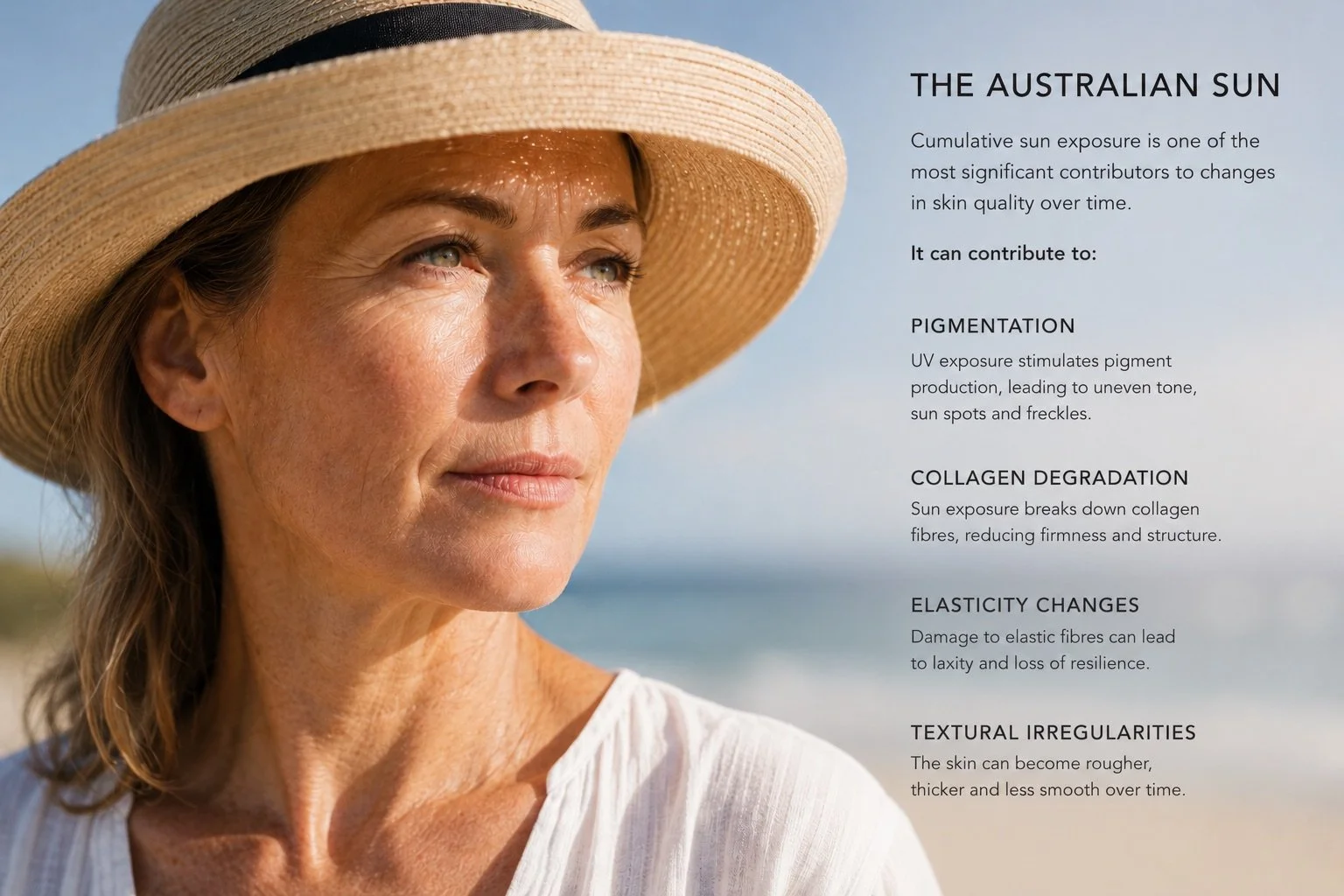
If I had to identify one factor that most consistently influences skin quality in Australia, it would be cumulative sun exposure. Many patients do not notice the effects developing in real time. The changes occur slowly; a little more pigmentation, a little more redness. Slightly reduced elasticity, more visible lines.
Then one day they compare photographs from ten years ago and realise their skin looks different!
The challenge is that ultraviolet exposure affects more than one aspect of skin quality. It contributes to pigmentation, collagen degradation, elasticity changes and textural irregularities simultaneously. This is one reason why the effects of sun exposure can appear so significant over time.
The Importance Of Hydration
Hydration is often discussed as though it is simply a cosmetic issue. In reality, hydration underpins normal biological function throughout the body. In the Emergency Department, I typically see increased rates of urinary tract infections, kidney stones and gout during the colder months of the year, as people tend to drink even less water in winter.
Healthy skin depends upon healthy cellular function, and healthy cellular function depends upon adequate hydration. When patients think about hydration, they often focus on how their skin looks. I tend to think about how the skin functions.
Redness Is Often A Clue
Another feature that influences how healthy skin appears is redness. I often view it as information.
When I see significant redness, particularly around the nose and cheeks, I begin thinking about possible causes. Is there an inflammatory skin condition such as rosacea present? Are lifestyle factors contributing? Is alcohol consumption playing a role? Is the patient dehydrated? Are dietary factors involved?
The skin often provides clues about what is occurring beneath the surface. This is one reason why healthy skin tends to have relatively even colour. The absence of visible inflammation contributes significantly to the overall appearance.
Why Light Matters
When patients describe healthy skin as bright, they are usually not talking about shine, they are noticing how light interacts with the skin.
Certain facial areas, particularly the cheeks, naturally reflect light. When skin tone is relatively even and the surface texture is consistent, light is reflected more predictably. As pigmentation, redness and textural changes develop, that reflection becomes less uniform.
Why We Associate Healthy Skin With Youth
Many of our impressions occur unconsciously. Even skin tone, good hydration and minimal pigmentation are characteristics we instinctively associate with youth. Most people cannot explain exactly why one person appears younger than another; they simply recognise the signals. Whether these associations are cultural, biological or a combination of both, they appear remarkably consistent.
What Patients Notice
One of the most interesting observations I hear from patients is not what they notice themselves, but what other people notice. Patients who improve their skin quality often report hearing similar comments from friends, family and colleagues.
"You look fresh."
"You look rested."
"You look younger."
Recently, several of my patients attended high school reunions and reported being told they appeared younger than many of their peers. These observations are rarely about a single wrinkle or feature. Rather, they reflect the cumulative effect of healthy skin.
A Doctor's Perspective
When I assess skin quality, I am not looking for perfection, I’m looking for signs of healthy skin function.
Hydration.
Even skin tone.
Minimal pigmentation.
Limited inflammation.
Good elasticity.
These characteristics contribute to an appearance that most people instinctively recognise as healthy, rested and youthful. If patients take away one message from this discussion, I would like it to be this:
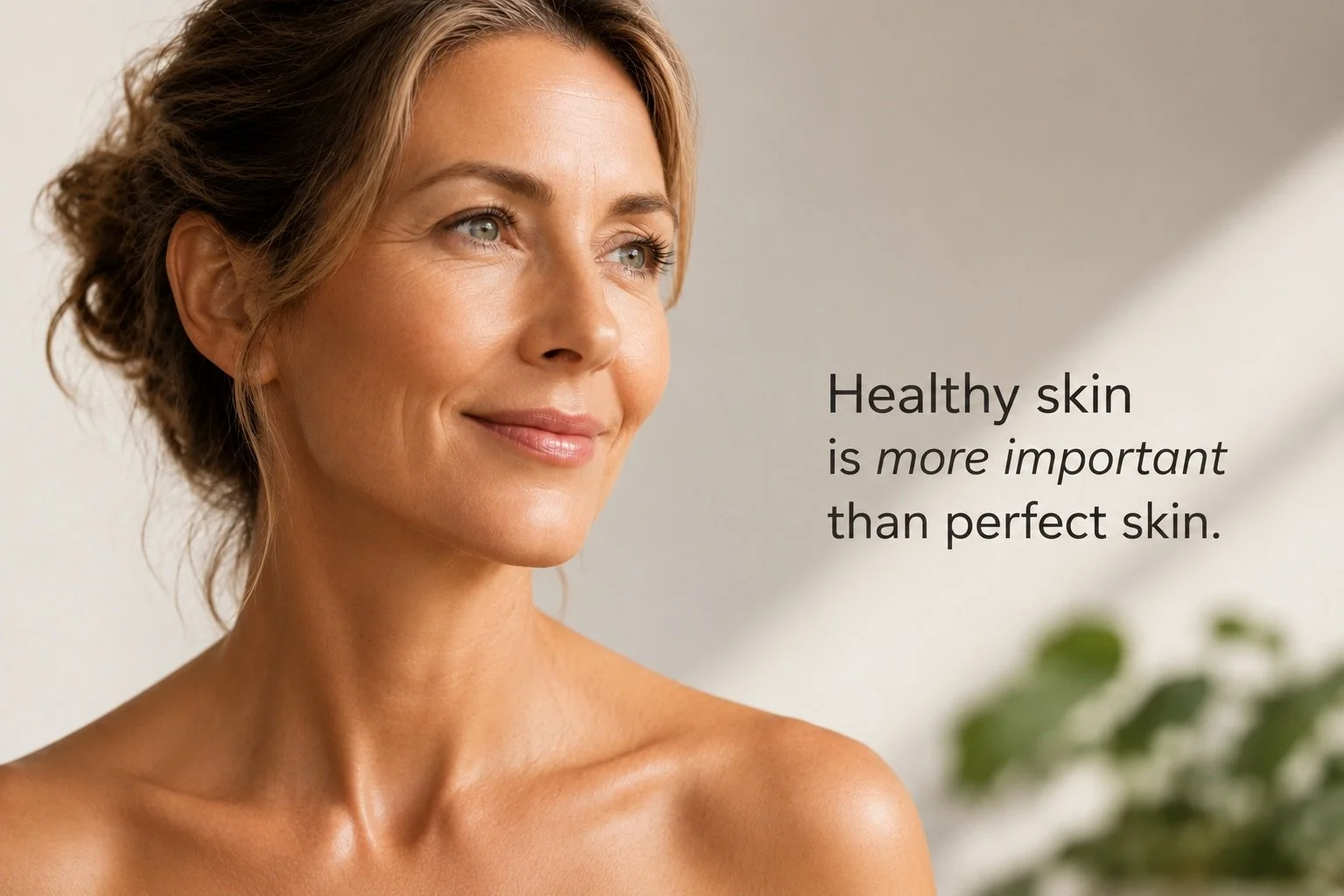
Healthy skin is more important than perfect skin.