

Why Sunscreen Is the Most Important Pigmentation Treatment You Can Use
When people begin looking for treatment for pigmentation, they usually focus on finding the right serum.
Should it contain vitamin C?
Is tranexamic acid better?
Would retinol work faster?
Should they use kojic acid, alpha arbutin or cysteamine?
These are reasonable questions, but they often overlook the most important part of pigmentation management. Before deciding how to reduce pigment, it is worth understanding why pigment develops in the first place.
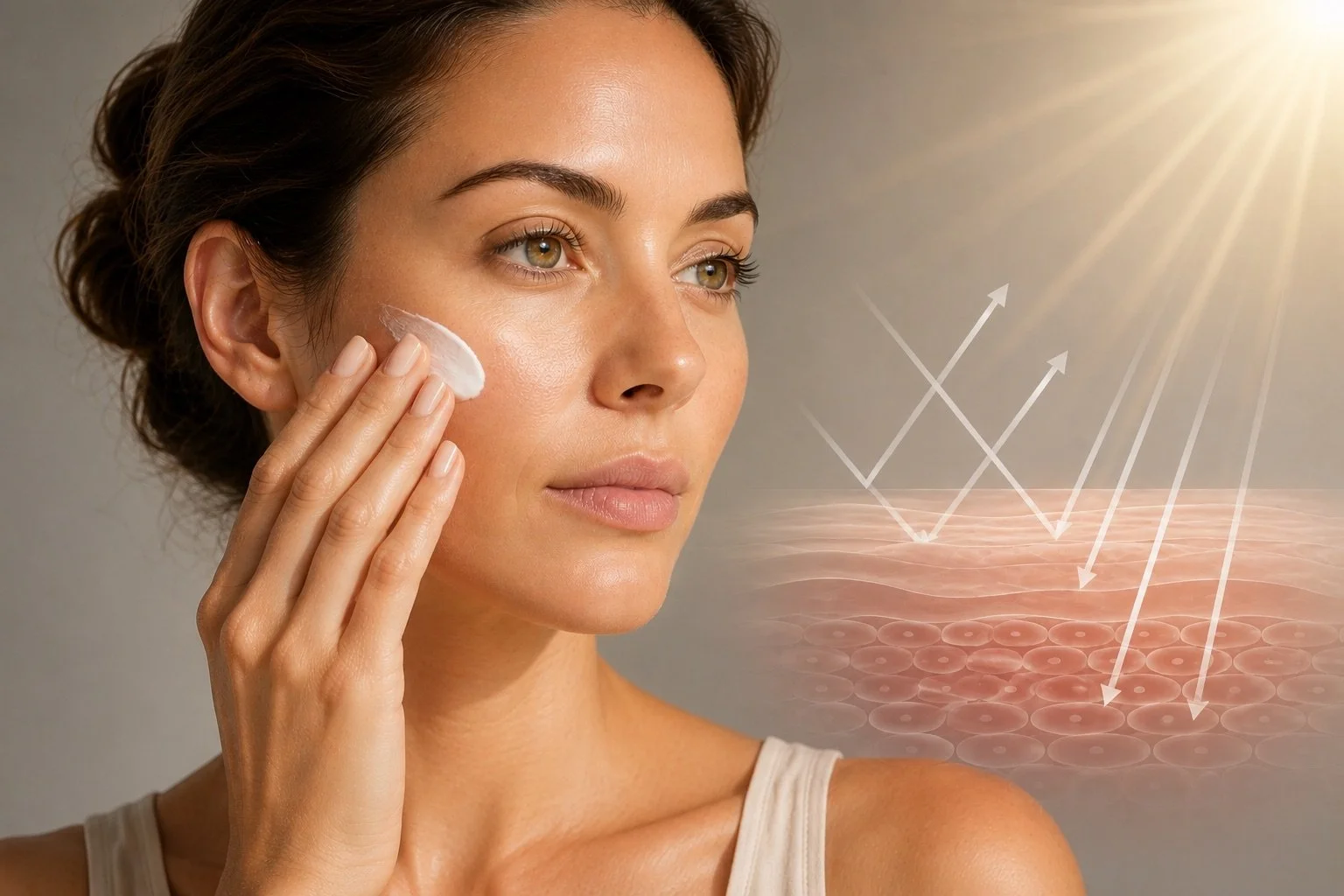
For most patients, ongoing exposure to ultraviolet radiation continues to stimulate melanocytes every day. If that stimulus remains unchanged, the skin is continually being instructed to produce new pigment, even while active ingredients are working to remove the pigment that already exists. This is one of the reasons pigmentation can seem to improve initially before gradually returning.
Treatment has not necessarily failed, but biological signals responsible for producing pigment are still present.
Pigmentation Is an Ongoing Process
Many people think of pigmentation as something that appeared months or years ago. In reality, pigment production is continuous. Melanocytes constantly respond to their environment. They receive signals generated by ultraviolet radiation, inflammation, hormones and oxidative stress, then decide how much melanin to produce.
This means pigmentation is not simply something that happened in the past. It is something the skin continues to regulate every day. Successful treatment therefore depends on reducing the signals that activate melanocytes while gradually removing excess pigment that has already accumulated.

Ultraviolet Radiation Is Only Part of the Story
For years, pigmentation advice focused almost exclusively on ultraviolet radiation. We now understand the picture is more complex. Both UVA and UVB contribute to skin ageing and pigment production, although they behave differently.
UVB is primarily responsible for sunburn and plays an important role in stimulating melanin production.
UVA penetrates more deeply into the skin, contributes to collagen degradation, accelerates photoageing and also stimulates pigmentation over time.
We can’t afford to ignore either of them.
Broad-spectrum sunscreens remain the recommended standard rather than products that protect against only one part of the ultraviolet spectrum.
Visible Light Also Matters
One of the more important developments in pigmentation research over the past decade has been recognising the contribution of visible light. Visible light sits immediately beyond ultraviolet radiation within the light spectrum. Unlike ultraviolet light, it is present even when there is little risk of sunburn.
Research suggests that visible light can stimulate pigmentation, particularly in patients with melasma and in individuals with darker skin phototypes. For these patients, traditional ultraviolet protection alone may not provide complete protection against ongoing melanocyte stimulation.
Iron oxide-containing tinted sunscreens may provide additional protection against visible light and are increasingly recommended for selected patients managing melasma. This is an area of ongoing research, but it has already changed the way many clinicians approach long-term pigmentation management.
Why Daily Protection Matters More Than Perfect Weather
When discussing sunscreen, it is easy to focus on wrinkles, pigmentation and maintaining healthy skin, but photoprotection is first and foremost a health issue.
Australia has the highest incidence of skin cancer in the world. Around two in three Australians will be diagnosed with some form of skin cancer by the age of 70, and skin cancer accounts for approximately 80% of all newly diagnosed cancers nationally. Each year, more than 17,000 Australians are diagnosed with melanoma, while skin cancers collectively claim around 2,300 Australian lives. These statistics reflect the cumulative effects of ultraviolet radiation over many years rather than isolated episodes of sunburn.
The same ultraviolet exposure that increases the risk of skin cancer also accelerates collagen breakdown, stimulates pigmentation, damages elastin, contributes to visible blood vessel formation and drives many of the biological changes associated with facial ageing. This is why I encourage patients to think of sunscreen as far more than an anti-ageing product.
It is one of the simplest and most effective long-term investments you can make in both the health and appearance of your skin. Many patients apply sunscreen only when they expect to spend long periods outdoors. Pigmentation does not always behave that way.
Short periods of cumulative exposure while driving, walking between appointments or sitting near windows gradually contribute to melanocyte stimulation over many years. This is particularly relevant in Australia, where ultraviolet radiation remains high throughout much of the year.
Daily photoprotection is therefore less about preventing a single episode of sunburn and more about reducing thousands of small pigment-producing signals over a lifetime.
Sunscreen Protects More Than Pigmentation
Patients often think of sunscreen as a pigmentation product, but its benefits extend much further. Consistent photoprotection also helps reduce collagen degradation, slows many of the visible changes associated with photoageing and supports the results achieved through topical skincare and procedural treatments. Whether someone is using vitamin C, retinoids, chemical peels, microneedling or laser treatment, photoprotection helps preserve those improvements over time. In that sense, sunscreen becomes the foundation upon which every other treatment is built.
Choosing a Sunscreen
Patients often ask me which sunscreen is "the best."
There is rarely a single answer. The most appropriate sunscreen depends on skin type, daily routine, previous skin reactions and the condition being treated. I don’t sell a sunscreen at cosmenon.com because it’s a really personal choice. I tell my patients to use the SPF 50+ that they like, because then they’re more likely to actually use it.
For patients managing pigmentation, I generally encourage these principles:
Choose a broad-spectrum SPF50+ sunscreen that will be comfortable enough to wear every day.
Apply an adequate amount rather than using only a small quantity.
Reapply when appropriate, particularly after prolonged outdoor exposure.
For patients with melasma or persistent pigmentation, tinted formulations containing iron oxides may provide additional protection against visible light and are worth discussing during consultation.
Putting the Science Into Practice
When building a pigmentation routine, sunscreen is never considered as an optional final step. It is usually the first decision.
Once appropriate photoprotection has been established, the remainder of the routine can be tailored to the individual's diagnosis and treatment goals. A patient with diffuse photodamage may benefit from combining daily sunscreen with antioxidant support, such as Alastin C-RADICAL Defense, to help reduce oxidative stress generated by ultraviolet exposure. Someone managing melasma may require a different combination of pigment-modulating ingredients alongside meticulous daily photoprotection.
Patients recovering from procedures may temporarily prioritise barrier repair using products such as Alastin Skin Nectar, Alastin HA Immerse Serum, or selected Rejuran skincare before introducing stronger active ingredients.
The products differ because the biology differs. The common feature in every routine is consistent daily photoprotection.
Looking Ahead
Photoprotection forms the foundation of pigmentation management, but it is only one part of the treatment plan. The next step is understanding the ingredients that directly influence melanogenesis, reduce oxidative stress and improve skin renewal.
Some have decades of clinical evidence behind them. Others have generated considerable marketing but relatively modest scientific support. Knowing the difference helps patients invest in products that are chosen for their biology rather than their advertising.