

Why We Often Notice Ageing In Photographs First
For many people, facial ageing does not become obvious while looking in the mirror. Instead, it often begins with a photograph. A holiday picture. A family gathering. A candid image taken by someone else.
The reaction is often immediate:
“I didn’t realise I looked that tired.”
“Is that really what I look like now?!”
“When did my face change?”
Interestingly, the face may not have changed dramatically overnight. The photograph has simply allowed you to see something that has been developing gradually over time.
Why do so many people notice facial ageing in photographs before they notice it in everyday life?
The answer involves both biology and psychology.

We See Ourselves Every Day
The human brain is remarkably good at adapting to gradual change. When we see our own reflection each day, small changes are often absorbed into our perception without attracting much attention. The process is similar to watching a child grow. Parents may not notice day-to-day changes, yet someone who has not seen the child for several years may be struck by how much they have grown.
Facial ageing often follows the same pattern. Because changes occur slowly, the brain continuously updates its internal image of what we look like. A photograph interrupts that process. It freezes a moment in time and allows us to view ourselves more objectively.
Photographs Remove Familiarity
When we look in the mirror, we see a familiar and dynamic version of ourselves.
We move.
We smile.
We adjust our expression.
We often view ourselves under predictable lighting conditions.
A photograph is different. It captures a single expression, a specific angle and a particular lighting environment. Without movement and familiarity, subtle age-related changes may become more noticeable. Many patients describe this as suddenly seeing themselves from an outsider’s perspective.
Light Reveals More Than We Realise
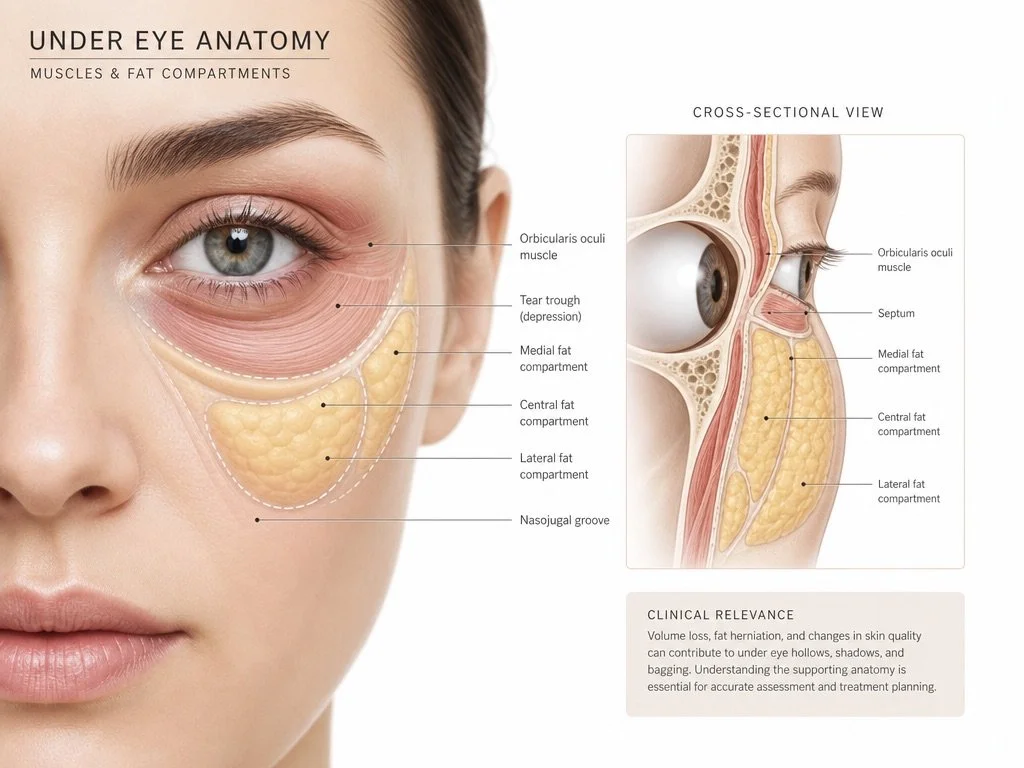
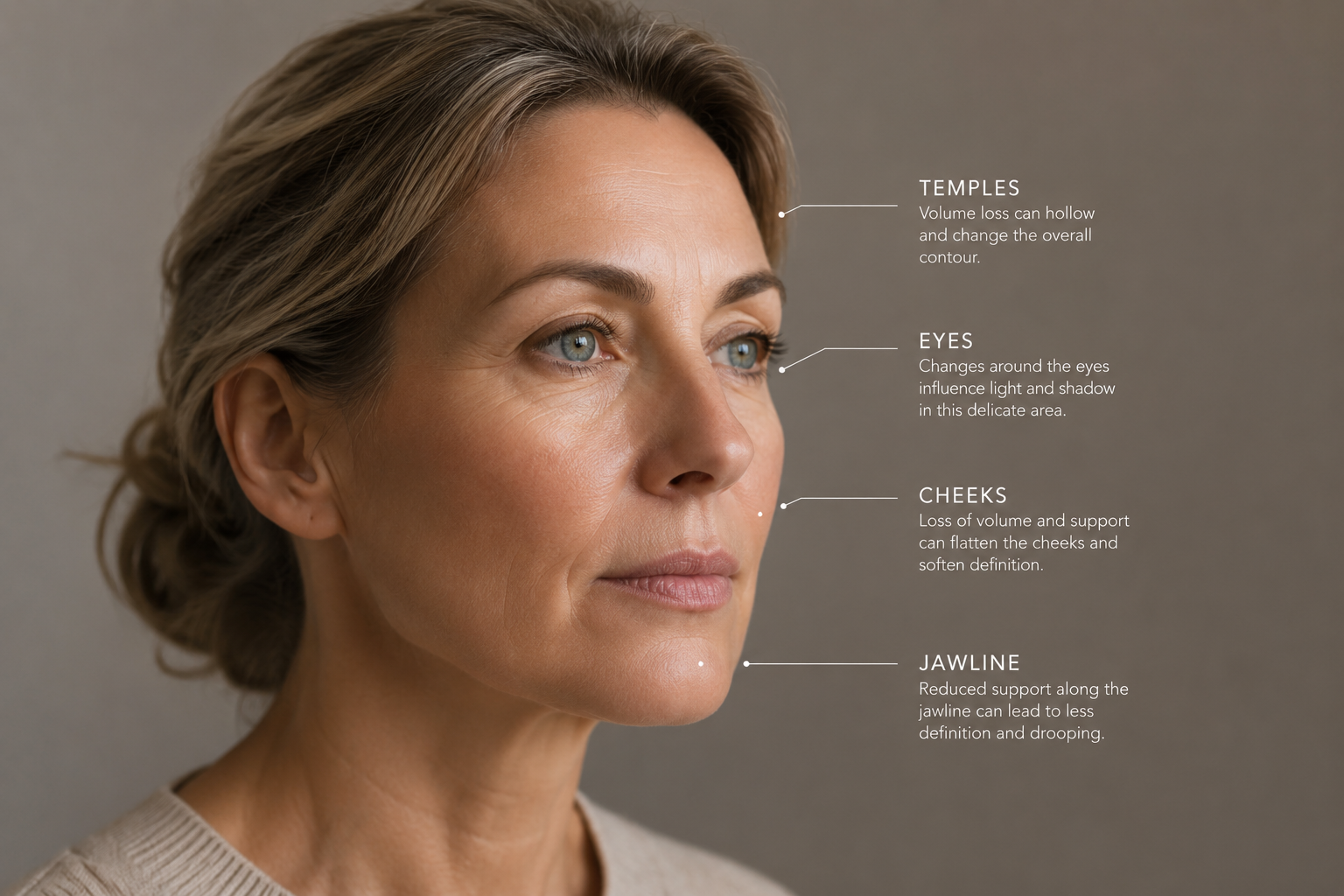
One of the most important reasons photographs highlight facial ageing is the way light interacts with the face. Facial ageing influences how light is reflected. Changes in skin quality, volume distribution and facial contour all alter the pattern of light and shadow. As volume changes occur around the cheeks, eyes and temples, shadows may become more apparent. As skin quality changes, the skin may reflect light less evenly.
The result can be an appearance that feels older or more tired, even when the underlying changes remain relatively subtle. In many cases, patients are responding to altered light reflection rather than a specific wrinkle or line.
The Face Is A Three-Dimensional Structure
The human face is highly dependent on contour. Cheeks, temples, jawlines and the area around the eyes all contribute to how light moves across the face. As facial ageing progresses, changes in structure, volume and support influence these contours. Even small changes may alter the balance between highlights and shadows. Photographs often exaggerate these effects because cameras capture a two-dimensional representation of a three-dimensional object. Areas of shadow may therefore appear more prominent than they do in everyday life.
Why The Eye Area Often Draws Attention
Many people first notice ageing around the eyes, and this is not surprising. The eye region contains some of the thinnest skin on the body and is central to human communication.
Subtle changes involving:
Skin quality
Pigmentation
Volume distribution
Facial shadowing
can have a significant impact on how rested or youthful a person appears. Because our attention naturally gravitates towards the eyes, even relatively small changes in this area may become highly noticeable in photographs.
Looking Tired And Looking Older Are Not Always The Same Thing
Patients often use the words “tired” and “older” interchangeably. The two concepts are related but not identical.
A tired appearance may result from:
Sleep deprivation
Stress
Facial shadowing
Skin quality changes
Volume redistribution
Illness
Ageing can contribute to some of these factors, but not all. This is one reason why people sometimes feel they look older in photographs even when the primary issue is not chronological ageing itself.
Why Certain Photographs Feel Worse Than Others
Not every photograph produces the same reaction.
Several factors influence how the face appears in images.
Lighting
Overhead lighting often exaggerates shadows beneath the eyes and around the lower face.
Camera Angle
Lower camera positions may emphasise the jawline and neck.
Lens Distortion
Phone cameras can subtly alter facial proportions depending on distance and focal length.
Facial Expression
A neutral expression often appears less vibrant than an animated face during conversation.
These factors do not create ageing, but they can make age-related changes more noticeable.
What Patients Are Often Seeing
When patients say:
“I suddenly look older in photos.”
they are rarely reacting to a single wrinkle.
More commonly, they are noticing a combination of:
Altered facial contours
Changes in light reflection
Skin quality differences
Volume redistribution
Facial shadowing
These changes often develop gradually over many years before becoming obvious. The photograph simply provides a different perspective.
A Doctor’s Perspective
One of the more common observations during consultation is that patients arrive with a specific photo on their phone that they want to show me. They’re usually not concerned about a particular wrinkle or line. Instead, they describe looking tired, older or less like themselves.
What they are usually noticing is the cumulative effect of several ageing processes occurring simultaneously; changes in skin quality, facial volume, structural support and light reflection often contribute more to these impressions than any one individual feature.
For this reason, photographs can sometimes be useful. They provide a snapshot of how facial ageing presents as a whole rather than drawing attention to isolated concerns.
Understanding what a photograph is actually revealing is often the first step towards understanding how the face changes over time.