

Why Different People Age Differently
Have you ever noticed how two people of the same age can appear remarkably different?
One may have relatively smooth skin and well-defined facial contours, while the other may appear older than their years. This usually leads to an important question:
“Why do some people seem to age more slowly than others?”
The answer is complex.
Facial ageing is influenced by a combination of genetics, lifestyle, environmental exposure and general health. No single factor determines how a person will age. Instead, facial ageing reflects the cumulative effects of many influences acting over decades. Understanding these influences can help explain why ageing varies so significantly from person to person.
Genetics: The Starting Point
Genetics plays an important role in determining how we age, but not the entire outcome.
Inherited characteristics influence many aspects of facial ageing, including:
Skin thickness
Facial bone structure
Fat distribution
Collagen production
Pigmentation tendencies
Facial shape
Some individuals naturally possess features that appear to age more slowly. Others may inherit characteristics that make age-related changes become apparent earlier.
Lifestyle and environmental factors often have a substantial influence over time.
Sun Exposure And Photoageing
If there is one external factor consistently associated with visible skin ageing, it’s ultraviolet radiation.
The effects of sun exposure accumulate gradually throughout life.
Repeated ultraviolet exposure contributes to:
Collagen breakdown
Pigmentation changes
Fine lines
Reduced elasticity
Altered skin texture
A significant proportion of visible facial ageing is related to years of cumulative sun exposure. This is one reason why people with similar genetics can age quite differently depending on lifestyle and environmental history.
Smoking And Skin Ageing
The association between smoking and accelerated skin ageing has been recognised for decades.
Smoking exposes tissues to oxidative stress while also affecting blood flow and oxygen delivery.
Over time, these effects may contribute to:
Reduced skin quality
Fine lines
Changes in skin texture
Loss of elasticity
Dullness
Although ageing is influenced by numerous factors, smoking remains one of the most consistently recognised lifestyle contributors to premature skin ageing.
What About Vaping?
Compared with smoking, long-term data regarding vaping is limited.
Vaping still exposes tissues to various compounds that may influence inflammation and oxidative stress.
While the full long-term consequences remain under investigation, it would be wrong to assume vaping doesn’t contribute to skin-health issues.
As evidence continues to emerge, maintaining healthy skin is likely to involve minimising exposure to both traditional tobacco products and vaping devices.
Weight Changes And Facial Ageing
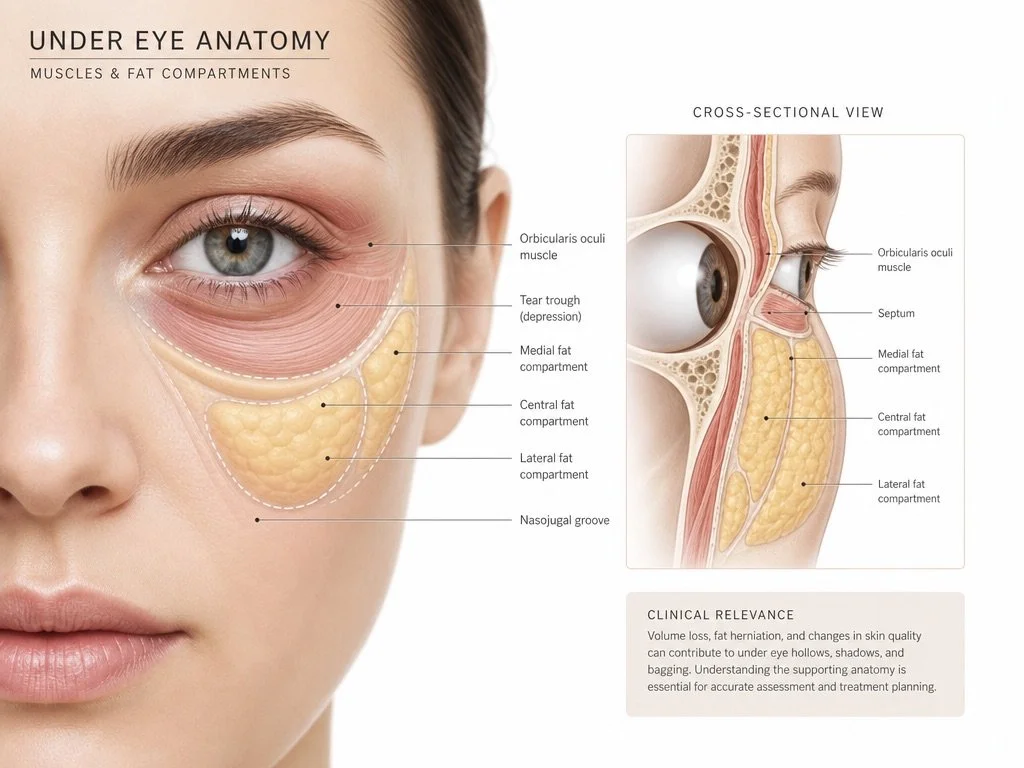
Body weight influences facial appearance. The face contains multiple fat compartments that contribute to contour and support. When body weight changes significantly, facial volume can change as well.
Some individuals notice:
More prominent facial shadows
Hollowing beneath the eyes
Reduced cheek fullness
Changes around the temples
Less definition in areas that previously appeared fuller
In recent years, increasing use of GLP-1 medications for weight management has brought greater attention to the relationship between weight loss and facial volume.
These changes are not unique to medication use. They reflect the broader relationship between facial volume and body composition.
Sleep And Recovery
Sleep is often discussed in relation to facial appearance, and for good reason. During sleep, the body undertakes numerous restorative processes.
Poor sleep quality may contribute to:
Dark circles
Increased facial puffiness
Dull skin appearance
Reduced skin barrier function
Increased perception of fatigue
Although sleep cannot prevent ageing, consistently good sleep habits support overall skin health and recovery.
Stress And Ageing
Stress affects more than mental wellbeing, and chronic stress influences hormonal pathways, inflammatory responses and lifestyle behaviours that can affect skin quality over time.
Periods of prolonged stress are often associated with:
Poor sleep
Reduced exercise
Dietary changes
Increased alcohol consumption
Smoking or vaping behaviours
For this reason, stress frequently influences facial ageing indirectly as well as directly.
Alcohol And Skin Health
Alcohol is another factor commonly discussed in relation to ageing.
Excessive alcohol consumption may contribute to:
Dehydration
Inflammation
Poor sleep quality
Nutritional deficiencies
The effects are often cumulative and can influence overall skin quality over time.
Like many aspects of ageing, the relationship is not simply about one exposure but about long-term patterns and habits.
Nutrition And General Health
The skin is a living organ that reflects overall health. Adequate nutrition supports normal tissue repair, skin barrier function and collagen production. No specific food can prevent ageing, but long-term dietary patterns may influence overall skin health and appearance.
A balanced approach that supports general health is likely to benefit the skin as well.
Why Some People Seem To Age Better Than Others
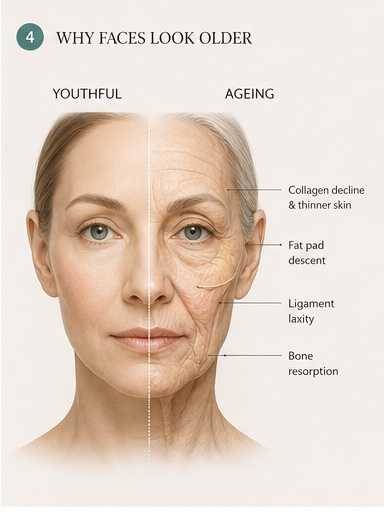
When people compare themselves to friends, siblings or colleagues, they often assume that genetics explains everything. In reality, visible ageing usually reflects the interaction between genetics and lifestyle. Two individuals may begin with similar genetic foundations but experience decades of different exposures:
Sun exposure.
Smoking.
Alcohol.
Sleep quality.
Weight fluctuations.
Stress.
General health.
Over time, these factors accumulate and contribute to the unique way each person ages.
Ageing Is Not A Competition!
It is easy to compare ourselves with others. Social media, photographs and modern culture often encourage constant comparison. Every face ages differently because every life is different. The goal should not be to avoid ageing altogether. Ageing is a normal biological process.
A more useful perspective is understanding the factors that influence ageing and making informed decisions that support long-term skin and facial health.
A Doctor’s Perspective
One of the most common assumptions I hear in consultation is that ageing is determined almost entirely by genetics. Genetics certainly matters, but it rarely tells the whole story. The face reflects decades of accumulated experiences, habits, environmental exposures and biological changes. While we cannot alter our genetics, many of the factors influencing skin quality and facial ageing remain within our control.
Understanding these influences is often the first step towards understanding how and why facial ageing develops over time.