

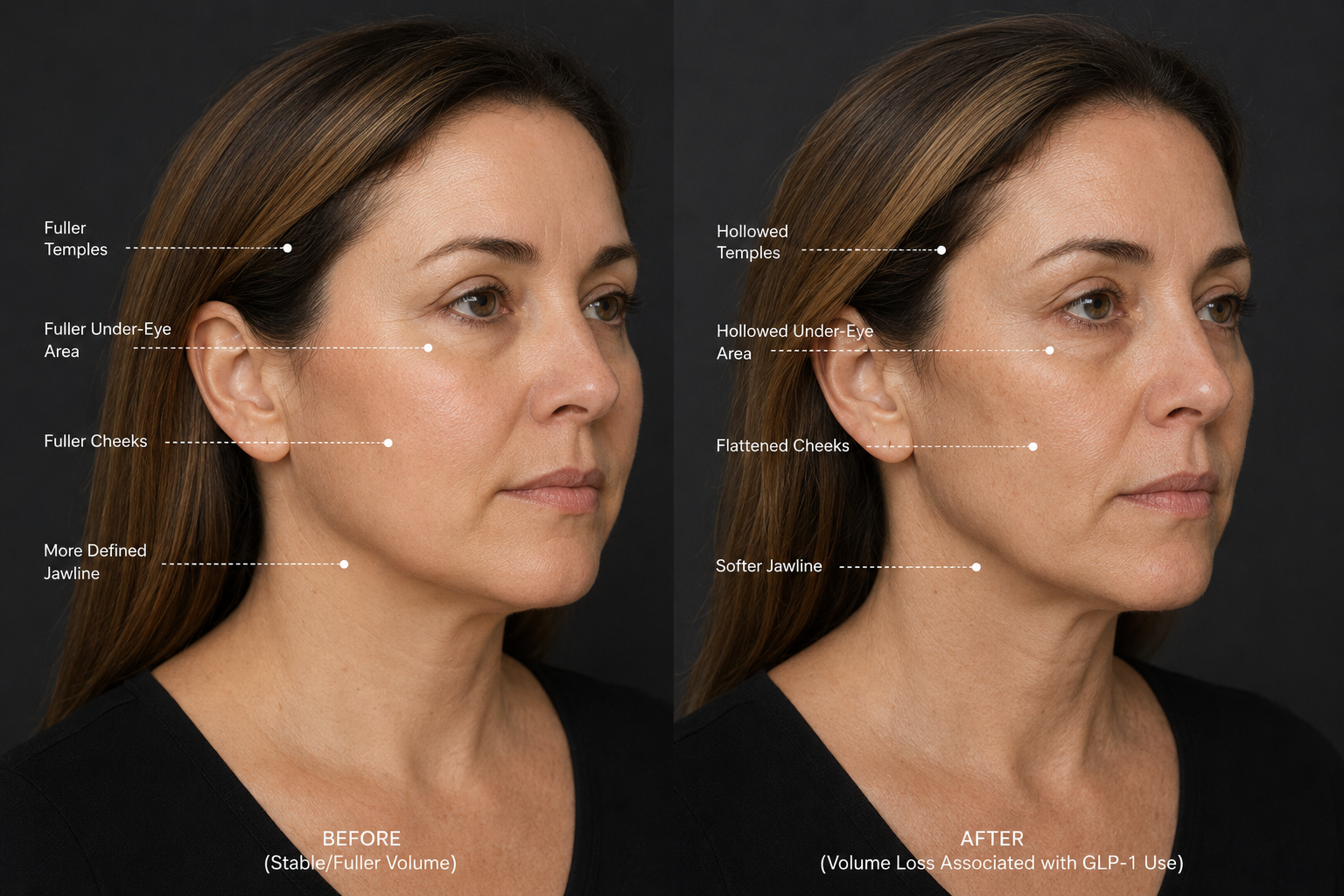
Can Cosmetic Treatments Help After Weight Loss?
After significant weight loss, many people begin researching whether changes in their facial appearance can be improved.
The most important step is identifying what has actually changed. Facial ageing occurs across multiple layers. Skin, collagen, facial fat compartments, muscle and underlying bone all contribute to facial shape and support.
Weight loss can alter the relationship between these structures. A hollow area, deeper fold or change in facial contour may seem like a single concern when looking in the mirror, but the visible change is often the result of several anatomical changes occurring together.
Effective treatment planning requires looking beyond the surface appearance and considering the face as a connected structure.
When Skin Quality Is the Main Change
Many concerns after weight loss are not purely related to lost volume. The skin itself changes over time. As I’ve stated before in prior articles, collagen provides strength and structure within the dermis, while elastin contributes to flexibility and recoil. Together, these proteins help maintain skin firmness and resilience.
Ageing, ultraviolet exposure, smoking, inflammation and other factors gradually influence this support network. After weight loss, changes in the underlying facial structure may make existing skin changes more noticeable. The concern may appear as thinner skin, reduced firmness, fine lines, texture change or a general sense that the skin does not look as healthy as before.
In these situations, supporting skin quality may form an important part of the discussion.
When Facial Support Has Changed
Facial volume contributes to the way different regions of the face relate to each other. The cheeks, temples, under-eye region and jawline are influenced by changes occurring across several anatomical layers, including fat compartments, ligaments and underlying bone.
Facial fat exists in organised compartments that influence shape, contour and support. These compartments interact with deeper structures including ligaments and bone. Changes in these support systems can affect areas such as the cheeks, temples, under-eye region and lower face.
After significant weight reduction, these structural changes may become more apparent. The aim is not to recreate a previous version of the face. Facial ageing treatment requires understanding proportion, balance and the relationship between different anatomical regions. Adding volume without considering these relationships can create results that do not look natural.
Avoiding the Over-Correction Cycle
This is really important. It’s what I see happening in high-volume cosmetic clinics.
One of the challenges after significant weight loss is the assumption that every visible change represents something that needs to be replaced. Facial ageing is not simply a process of empty spaces appearing that require filling.
This distinction is important because modern aesthetic medicine has sometimes encouraged a volume-focused approach. When treatments are centred mainly around replacing lost fullness, there is a risk of gradually adding more and more volume without addressing the reason the face has changed. A face that appears tired, heavier or less supported may have several contributing factors. Changes in skin quality, collagen structure, facial fat compartments, muscle activity and underlying bone support can all influence the final appearance.
Careful volume restoration can have an important role when structural support has changed. The decision of where and how much requires an understanding of facial anatomy, rather than simply treating every hollow or fold individually. This is especially relevant after weight loss. Returning the face to its previous level of fullness may not suit someone whose overall body composition, health and appearance have changed. A more considered approach looks at the face as it is now - its structure, movement, proportions and the features that should be preserved.
A More Complete Approach After Weight Loss
The best approach after weight loss starts with understanding the individual.
How much of the change relates to skin?
How much relates to structure?
How much reflects the normal ageing process that was already occurring?
Modern facial assessment considers all of these factors together. At Cosmenon, treatment discussions begin with your anatomy, skin quality and health journey. My aim is to understand what has changed before considering which options may be appropriate.