

How to Age Well While Losing Weight
Weight loss has changed significantly over recent years.
With advances in medical treatments, including GLP-1 medications, many people are achieving degrees of weight reduction that were previously difficult to maintain.
For many, this can be life-changing.
As weight reduces, attention often turns toward a different question: how do we maintain the parts of the body that support long-term health?
Strength. Function. Skin quality. Metabolic health. The ability to remain active over time.
These factors influence not only how we look, but how we age.
Preserving Muscle During Weight Loss
One of the most important considerations during significant weight loss is maintaining muscle.
Skeletal muscle is a highly active tissue involved in movement, balance, glucose regulation and metabolic health. As we age, we naturally experience a gradual reduction in muscle mass and strength. This process, known as sarcopenia, is associated with increased frailty, reduced independence and poorer health outcomes. Research has increasingly demonstrated the importance of muscle preservation.
A study published in the American Journal of Medicine found that older adults with higher muscle mass had lower all-cause mortality compared with those with lower muscle mass. Studies examining muscle strength have found similar associations, with measures such as grip strength shown to predict future health outcomes across large populations.
During weight loss, the conversation therefore extends beyond the amount of weight lost. Maintaining adequate protein intake, resistance training and physical function all become important parts of preserving the tissues that support healthy ageing.
Protein, Repair and the Ageing Body
The body is constantly undergoing renewal. Muscle, skin and connective tissues are continuously being broken down, repaired and remodelled. Protein provides amino acids required for many of these processes.
Research into ageing has shown that older adults may require greater attention to protein intake because of changes in muscle protein synthesis and anabolic resistance. This becomes particularly relevant during weight reduction, when reduced food intake may make it harder to maintain adequate nutrition. The same biological principles also apply to skin. Collagen, elastin and other components of the extracellular matrix are protein-based structures that influence skin strength, elasticity and repair. Supporting these systems requires looking at the health of the body as a whole.
Skin Quality During Weight Loss
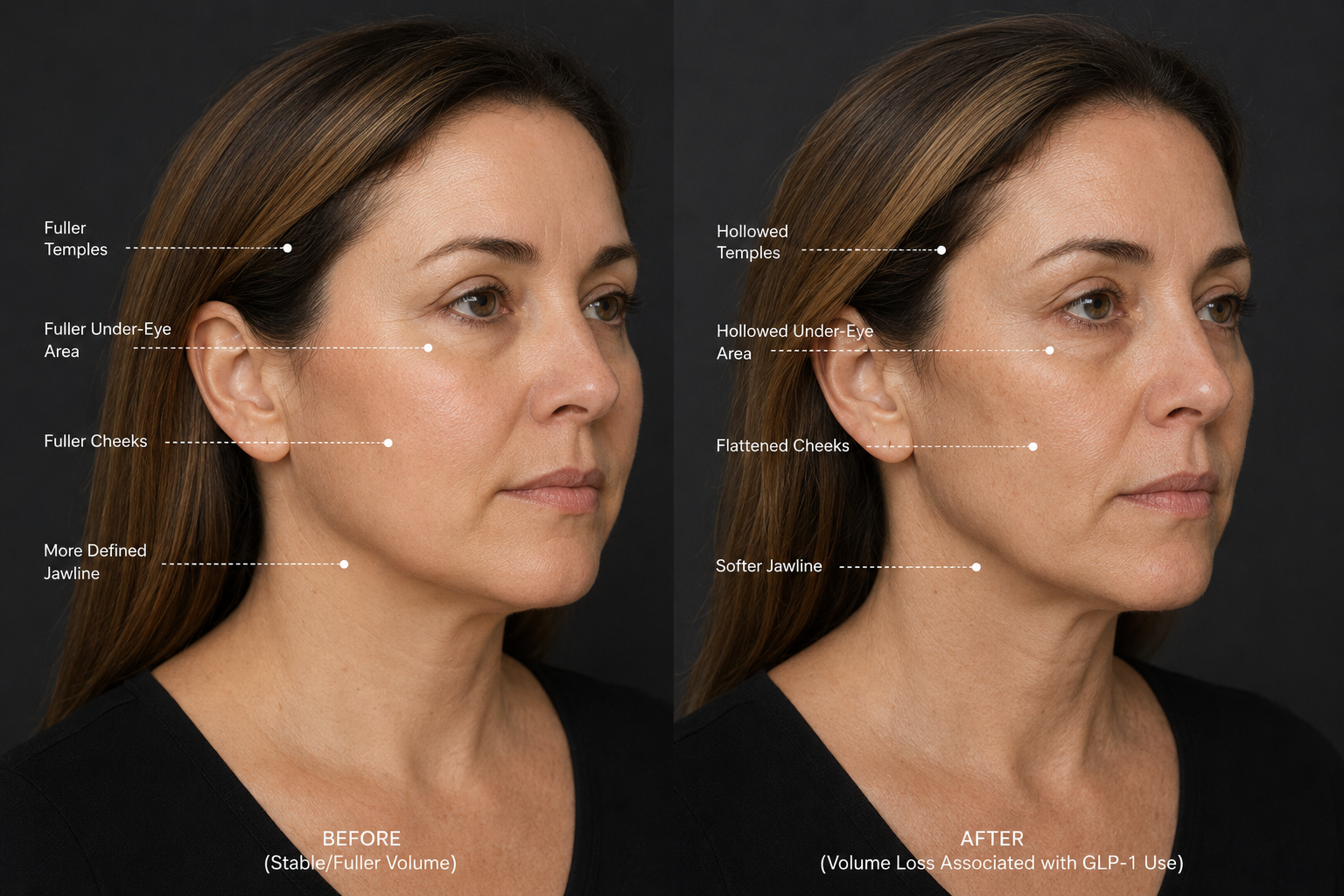
Facial changes after weight loss are frequently attributed only to lost volume. Skin quality plays a significant role in how the face responds. Healthy skin relies on a complex environment of collagen fibres, elastin, hydration and cellular signalling. Over time, ageing and environmental exposure affect this environment.
Research by Fisher and colleagues has demonstrated how ultraviolet exposure contributes to collagen breakdown and changes within the dermal extracellular matrix. These changes influence firmness, texture and the skin’s ability to adapt when the structures underneath change.
Protecting skin health during ageing involves many factors, including sun protection, avoiding smoking, nutrition and supporting normal repair processes.
Inflammation, Metabolism and Ageing
Ageing is influenced by more than visible changes. Chronic low-grade inflammation, sometimes described as “inflammaging”, has been recognised as one biological feature associated with ageing. Lifestyle factors including physical activity, sleep quality, nutrition and metabolic health influence many of the pathways involved in long-term wellbeing.
This does not mean ageing can be prevented (a personal bugbear of mine when it comes to this industry!). It means the way we live can influence many of the systems that change as we get older.
Thinking Beyond Weight Loss
A successful weight loss journey does not finish when a target number is reached. The next phase is maintaining the structures and behaviours that support health over time:
Muscle preservation.
Skin health.
Strength.
Nutrition.
Movement.
These are the same foundations that influence how we age.
For patients noticing facial changes after weight loss, the conversation should include more than replacing what has changed. At Cosmenon, I consider facial ageing within the broader context of health, structure and long-term tissue preservation. Understanding the person behind the change allows decisions to be made with the future in mind.